
Blog
Balayage vs Highlights in Dubai: Which Is Right for You?
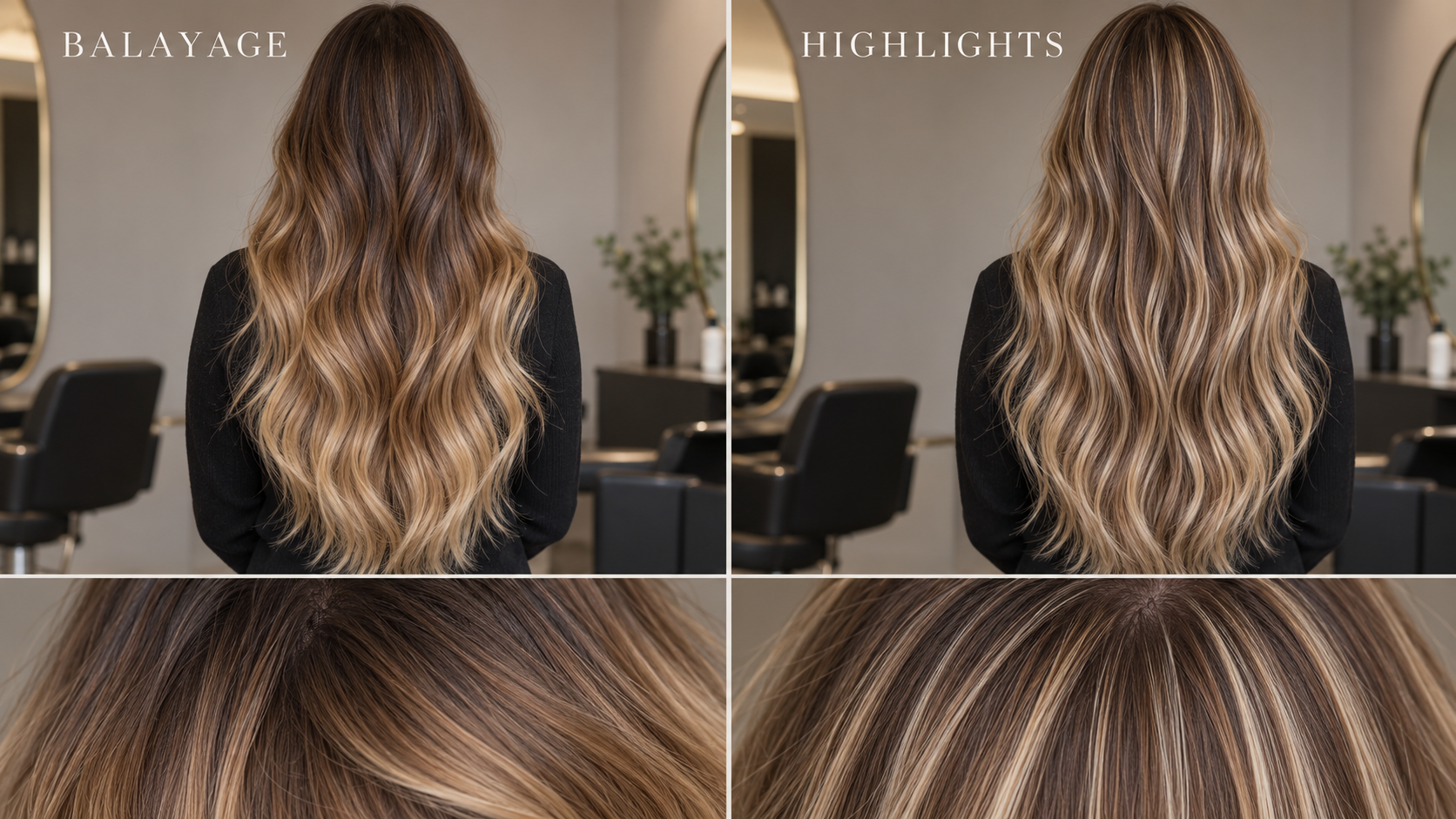
Balayage and highlights can both brighten your hair, add dimension and refresh your overall appearance. However, they create different effects and require different approaches to placement, maintenance and colour correction.
Balayage is often associated with a soft, naturally blended finish, while traditional highlights can produce more consistent brightness from the roots through the lengths. Neither technique is automatically better—the right option depends on your current hair colour, desired result, maintenance preferences and hair condition.
At Hani Hair in JLT, Dubai, every colour service begins with an assessment of the client’s hair, previous colour history and preferred finish. This allows the stylist to create a personalised colour plan rather than applying the same technique to every client.
What Is Balayage?
Balayage is a highlighting technique in which selected sections of hair are lightened to create a gradual, blended result.
The word “balayage” comes from the French word meaning “to sweep.” This describes the way the lightener is traditionally painted onto the hair. The colour is usually placed more softly near the roots and becomes increasingly visible through the mid-lengths and ends.
Depending on the desired result, balayage may be subtle and sun-kissed or considerably brighter and more dramatic. The technique can be customised according to the haircut, natural colour, face shape and areas where the client wants additional brightness.
Balayage is commonly chosen by clients who want:
- A soft transition from darker roots to lighter ends
- Natural-looking dimension
- Brightness around the face
- Less noticeable regrowth
- A personalised placement pattern
- A lower-maintenance appearance
- A blended blonde, brunette or caramel result
Although balayage is commonly associated with blonde hair, it can also be created using caramel, chocolate, copper, beige or other tones.
What Are Traditional Highlights?
Traditional highlights are created by selecting sections of hair, applying lightener or colour and normally enclosing the sections in foils.
The highlights may begin close to the scalp and continue through the lengths. Because they can be placed evenly throughout the hair, they often create more consistent brightness from the roots to the ends.
The stylist can adjust the size and spacing of each section. Fine highlights produce a softer, more blended result, while larger or more closely placed highlights create stronger contrast and brightness.
Traditional highlights may be suitable for clients who want:
- Noticeable brightness near the roots
- A more evenly blonde result
- Consistent colour throughout the hair
- Fine or bold dimensional sections
- Grey blending
- A structured and controlled placement
- Regular root-to-end brightness
Foils are also frequently used alongside balayage techniques when the client requires additional lift or a more controlled lightening result.
Balayage vs Highlights: What Is the Main Difference?
The most important difference is normally where and how the brightness is placed.
Balayage generally creates a softer root area and a gradual increase in brightness toward the ends. Traditional highlights usually begin closer to the scalp, creating a more consistent lightened effect from the roots downward.
| Feature | Balayage | Traditional highlights |
|---|---|---|
| Root appearance | Softer and more blended | Brighter and more defined |
| Placement | Customised, often focused on the surface and ends | Structured sections, commonly applied in foils |
| Overall finish | Natural, dimensional and graduated | Even, bright and consistent |
| Regrowth | Usually less noticeable | More visible as the roots grow |
| Maintenance | Often allows longer gaps between major lightening appointments | Usually requires more frequent root appointments |
| Best suited to | Soft dimension and lived-in colour | Brightness from the roots and an evenly highlighted result |
Modern colour services are not always limited to one method. A stylist may combine painted sections, foils, root shadowing and toning to achieve a customised result.
Which Technique Looks More Natural?
Balayage usually provides the softer and more naturally grown-out appearance.
Because the colour is blended through the root area, there is often no strong line as the natural hair grows. The lightest sections can be positioned around the face and through the ends, similar to the way hair may naturally become lighter after sun exposure.
However, highlights can also look very natural when they are applied in fine sections and carefully toned. Techniques such as babylights use extremely fine highlights to create delicate brightness without obvious stripes.
The final result depends on:
- The thickness of the selected sections
- The amount of contrast
- The placement pattern
- The natural base colour
- The toner used
- The condition and porosity of the hair
- The stylist’s blending technique
The technique alone does not determine whether the colour will look natural. Careful consultation and placement are equally important.
Which Is Better for Blonde Hair?
Both techniques can be used to create blonde hair, but they offer different types of blonde results.
Balayage may be preferable when you want a dimensional blonde with a softer root and brighter mid-lengths and ends. It works especially well for clients who like a lived-in blonde appearance and do not want a clearly defined regrowth line.
Traditional highlights may be more suitable when you want to appear noticeably blonde from the roots. Closely placed fine highlights can create a much brighter overall effect than a subtle balayage service.
Clients seeking a major blonde transformation may require more than one appointment. Attempting to reach a very light result in a single session can place unnecessary stress on previously coloured or fragile hair.
Which Is Better for Brunettes?
Balayage is particularly popular for brunettes because it can introduce dimension without removing the depth of the natural base.
Caramel, beige, hazelnut, chocolate and honey tones can be placed strategically through dark hair. This can create movement and brightness while maintaining an overall brunette appearance.
Highlights can also work beautifully on brunette hair. Fine highlights may soften a dark base, blend early grey hair or create a more noticeable transformation.
The amount of contrast should be selected carefully. Extremely light sections against a dark base can create a bold result, while tones closer to the natural colour usually appear softer and more blended.
Which Technique Is Better for Grey Blending?
Traditional highlights are often chosen for grey blending because fine sections can be placed close to the roots and distributed throughout the areas where grey hair is most visible.
Highlights do not necessarily cover every grey hair. Instead, they can reduce the contrast between the natural base and the grey strands, creating a more blended appearance.
Balayage alone may be less effective when the primary concern is grey hair directly at the roots, as it normally leaves more depth in that area. However, balayage can be combined with root colour or fine highlights to create a softer overall result.
The correct approach depends on the percentage of grey hair, natural base colour and whether the client wants full coverage or gentle blending.
Which Requires More Maintenance?
Balayage normally offers a softer grow-out, so clients may be able to leave longer intervals between major lightening appointments.
However, this does not mean balayage requires no maintenance. Toners can gradually fade, and the lengths may still require glossing, conditioning treatments and occasional refreshing.
Traditional highlights generally need more frequent root maintenance because the contrast between the highlighted hair and new growth becomes more visible.
Your maintenance schedule may include:
- Toner or gloss appointments
- Root-colour services
- Face-framing refreshes
- Partial highlights
- Full highlight appointments
- Deep-conditioning or bond-support treatments
- Regular trims
Dubai’s strong sun, heat, swimming pools, seawater and frequent washing can also affect coloured hair. Using suitable home-care products and protecting the hair from excessive heat can help maintain the tone and condition.
Can Balayage or Highlights Damage the Hair?
Any service that lightens the hair can cause dryness or damage if it is unsuitable, repeated too aggressively or performed without considering the hair’s condition.
The risk can be reduced through:
- A detailed consultation
- Reviewing previous colour treatments
- Strand testing when required
- Selecting a realistic level of lift
- Avoiding unnecessary overlap
- Using controlled application techniques
- Including bond support when appropriate
- Following a suitable home-care routine
Previously bleached, chemically straightened, very porous or severely weakened hair may not be suitable for intensive lightening. In some cases, the safest plan is to improve the condition first or create the desired effect gradually over several appointments.
Balayage is not automatically healthier than highlights. The condition of the hair depends more on the products, amount of lift, application, processing and maintenance than on the name of the technique.
How Do You Choose the Right Option?
Consider balayage if you want:
- A soft and dimensional result
- Less visible regrowth
- Brighter ends with a natural-looking root
- A lived-in blonde or brunette colour
- Face-framing brightness
- Longer gaps between major lightening services
Consider traditional highlights if you want:
- Brightness close to the roots
- A more evenly highlighted result
- A noticeable blonde transformation
- Fine or bold sections throughout the hair
- Grey blending
- More structured colour placement
A combination may be most suitable if you want soft roots but still require significant brightness. For example, your stylist may use foils for additional lift, balayage for dimension, a root shadow for blending and toner to refine the final shade.
Book a Balayage or Highlights Consultation in Dubai
The best colour technique depends on your starting point—not only the photograph you want to recreate.
At Hani Hair in JLT, Dubai, our stylists assess your natural colour, current condition, previous treatments, preferred maintenance schedule and desired result before recommending balayage, highlights or a customised combination.
We also consider your skin tone, haircut and daily styling habits when selecting the placement and final shade. This helps create a colour that looks balanced when your hair is straight, curled or naturally styled.
Contact Hani Hair to arrange a professional colour consultation and discover whether balayage or highlights are more suitable for your hair.
Related Posts
Ice Hair Extension Maintenance: What Happens During a Refill Appointment?
-
Posted by
Hani Hair
How Many Hair Extensions Do You Need for a Full Head?
-
Posted by
Which Hair Extension Method Is Best for Fine or Thin Hair?
-
Posted by
Professional Blow-Dry and Hairstyling in Dubai: Styles, Benefits and What to Expect
-
Posted by
Women’s Haircuts in Dubai: How to Choose the Right Cut for Your Hair
-
Posted by
Different Types of Hair Colour: Balayage, Highlights, Full Colour and More
-
Posted by
Different Types of Hair Treatments: Which One Is Right for Your Hair?
-
Posted by