Blog
Different Types of Hair Treatments: Which One Is Right for Your Hair?
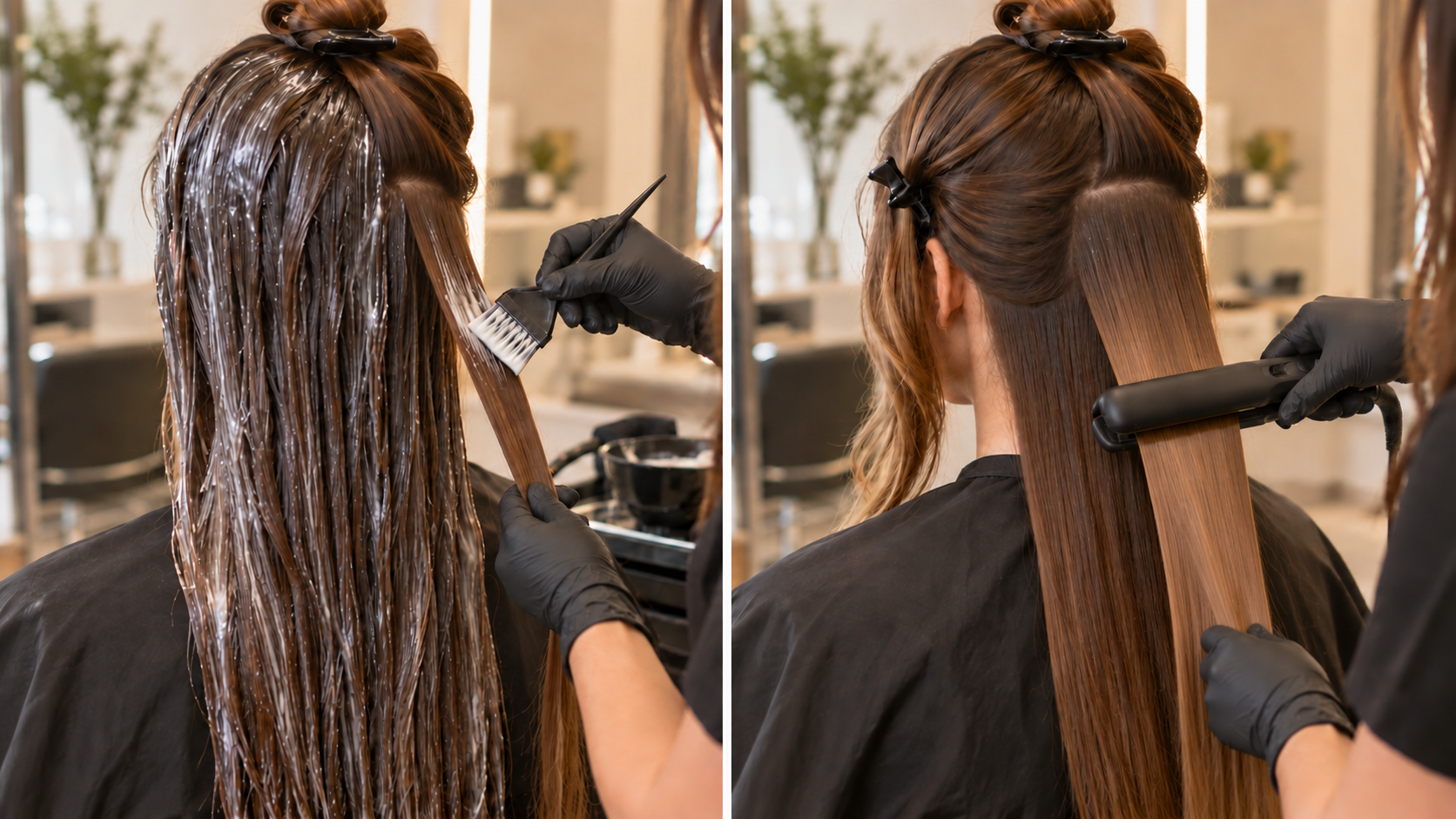
Dryness, frizz, breakage, dullness and difficult styling can look similar, but they do not necessarily require the same treatment.
Protein, keratin, anti-frizz, hair-botox, bond-repair and moisture treatments each serve a different purpose. Some are designed to strengthen damaged hair, while others focus on smoothing, conditioning or reducing frizz.
At Hani Hair in JLT, Dubai, we assess the hair’s condition, texture, treatment history and desired result before recommending a service. Choosing the correct treatment is important because a formula that works beautifully on one client may be too strong, too heavy or simply unnecessary for another.
Why Does Your Hair Need a Professional Assessment?
A stylist should examine more than the visible surface of the hair. Important factors include:
- Natural texture and curl pattern
- Hair thickness and density
- Porosity and elasticity
- Dryness, frizz or breakage
- Previous colour, bleach or straightening services
- Frequency of heat styling
- Scalp condition
- The result the client wants to achieve
The name printed on a product does not always explain its exact effect. Formulas differ between brands, and treatments with similar names may produce different levels of conditioning, smoothing or straightening.
Protein Hair Treatments
Hair is primarily made from a protein called keratin. Bleaching, colouring, chemical processing, frequent heat styling and environmental exposure can weaken the hair’s structure and leave it feeling fragile or overly porous.
A professional protein treatment is designed to temporarily support weakened areas and improve the hair’s strength and resilience.
It may be suitable for hair that:
- Breaks easily
- Feels weak or overly stretchy when wet
- Has been bleached or chemically processed
- Appears porous
- Has difficulty retaining moisture
- Lacks structure and elasticity
Protein treatments do not necessarily straighten the hair. Their main purpose is to improve the feel and manageability of compromised hair.
However, protein should be used carefully. Applying strong protein treatments too frequently may cause some hair to feel stiff, dry or brittle brittle. The hair needs an appropriate balance between protein and moisture.
Keratin Smoothing Treatments
Keratin treatments are generally used to smooth the hair, reduce frizz and make daily styling easier.
During the service, a specialised formula is applied and usually sealed into the hair with controlled heat. Depending on the product and application technique, the treatment may gently soften the natural texture or produce a considerably straighter result.
Keratin treatments may be considered for clients who want:
- Stronger frizz reduction
- A smoother and sleeker finish
- Faster blow-drying
- Less dependence on straighteners
- Softer waves or curls
- Greater control in humid weather
A keratin treatment does not permanently repair the internal structure of damaged hair. Its cosmetic smoothing effects gradually reduce through washing and natural hair growth.
Clients who want to preserve their curls should discuss this before the service because some keratin formulas may significantly relax the curl pattern.
Anti-Frizz Treatments
An anti-frizz treatment is designed to control puffiness, flyaways and the effects of humidity without necessarily making the hair completely straight.
It can be a good option for clients who like their natural waves or curls but want the hair to appear smoother, shinier and easier to manage.
Anti-frizz treatments may help with:
- Hair that expands in humid conditions
- Persistent flyaways
- Uneven or rough texture
- Excessive puffiness
- Difficult blow-drying
- Waves or curls that need more definition and control
The result is normally softer than a strong straightening treatment. The natural movement may remain visible, but the hair should look more polished and controlled.
Hair Botox Treatments
Despite its name, hair botox does not contain injectable botulinum toxin and does not involve injections.
The term is commonly used for an intensive conditioning and smoothing treatment. Depending on the brand, the formula may contain proteins, amino acids, oils, vitamins and moisturising ingredients.
Hair botox may be suitable for hair that appears:
- Dry or dehydrated
- Dull and lacking shine
- Rough through the lengths
- Frizzy or difficult to style
- Tired after colouring
- In need of softness and conditioning
The treatment can make the hair feel softer, smoother and more polished. However, it cannot permanently reverse severe chemical or heat damage.
Some hair-botox formulas can also relax waves or curls, especially when they are sealed with heat. The expected texture change should be discussed before application.
Bond-Repair Treatments
Chemical services such as bleaching and colouring can weaken some of the bonds that contribute to the hair’s strength.
Bond-repair treatments are formulated to support chemically compromised hair and improve its resilience. They are often used during or after colouring and lightening services.
They may be helpful when the hair:
- Has been repeatedly bleached
- Breaks through the lengths
- Feels weak after colouring
- Has reduced elasticity
- Requires additional support during a chemical service
Bond repair and protein treatments are not exactly the same. A bond-building product targets particular structural connections within the hair, while a protein treatment temporarily reinforces weakened or porous areas.
Neither treatment can restore severely damaged hair to its completely original condition. Sometimes trimming compromised ends is still necessary.
Moisture and Deep-Conditioning Treatments
Not every dry-looking head of hair needs protein. Some hair mainly requires moisture, softness and improved lubrication.
Deep-conditioning treatments commonly use moisturising and conditioning ingredients to make the hair softer, smoother and easier to detangle.
They may suit hair that:
- Feels dry or rough
- Tangles easily
- Lacks softness and shine
- Has been exposed to sun, heat or air conditioning
- Feels stiff after excessive protein use
- Needs conditioning without significant straightening
These treatments normally provide temporary cosmetic improvement rather than a permanent change in the hair’s structure. Regular home care is still necessary to maintain softness.
Scalp Treatments
Healthy-looking hair also depends on the condition of the scalp.
Professional scalp treatments may focus on cleansing excess oil, removing product buildup, hydrating a dry scalp or creating a cleaner environment around the roots.
A scalp service may be considered for:
- Excess oiliness
- Product buildup
- Mild dryness or flaking
- Scalp congestion
- Hair that feels heavy at the roots
However, salon treatments should not be used to diagnose or treat medical scalp conditions. Persistent itching, pain, inflammation, sores, severe flaking or unexplained hair loss should be assessed by a qualified medical professional.
Hair Treatments Compared
| Treatment | Main purpose | Typical result | Often considered for |
|---|---|---|---|
| Protein | Support weak or porous hair | Improved strength and resilience | Processed or breakage-prone hair |
| Keratin | Stronger smoothing and frizz reduction | Smoother and straighter hair | Frizzy, wavy or curly hair |
| Anti-frizz | Control humidity and puffiness | Smoother hair with more natural movement | Frizz without the desire for strong straightening |
| Hair botox | Intensive conditioning and smoothing | Softer, shinier and more polished hair | Dry, dull or rough hair |
| Bond repair | Support chemically weakened hair | Improved resilience and manageability | Bleached or frequently coloured hair |
| Moisture treatment | Restore softness and conditioning | Softer, more flexible hair | Dry, tangled or dehydrated hair |
| Scalp treatment | Cleanse or condition the scalp | Fresher, more balanced-feeling roots | Oiliness, dryness or buildup |
These are general descriptions. The exact result depends on the product formula, hair condition, application technique and use of heat.
Can Hair Treatments Cause Damage?
Professional treatments are not completely risk-free.
Damage or unwanted results may occur when:
- The wrong treatment is selected
- The formula is too strong for the hair
- Excessive heat is used
- The product is applied incorrectly
- Chemically incompatible services are combined
- Treatments are repeated too frequently
- Fragile or overprocessed hair is treated without testing
- The recommended aftercare is ignored
Bleached, extremely porous or severely weakened hair may require a strand test before any intensive smoothing treatment. In some situations, the safest recommendation is to postpone the service and follow a gentler care plan first.
Which Treatment Is Best for Your Hair?
The right choice depends on the main problem you want to address:
- Choose a protein treatment when weakness and breakage are the primary concerns.
- Consider keratin when you want stronger frizz control and a smoother or straighter finish.
- Choose an anti-frizz treatment when you want to control puffiness while preserving more natural movement.
- Consider hair botox when softness, conditioning and shine are the priorities.
- Choose bond repair for hair weakened by bleach or repeated chemical colouring.
- Consider a moisture treatment when the hair mainly feels dry, rough or tangled.
- Choose a scalp treatment when the concern involves buildup, dryness or oiliness around the roots.
Sometimes a customised combination or treatment plan is more appropriate than one intensive service.
How to Maintain the Results
Aftercare depends on the treatment used, but general recommendations include:
- Follow your stylist’s first-wash instructions
- Use the recommended shampoo and conditioner
- Apply heat protection before styling
- Avoid unnecessarily high temperatures
- Use a suitable mask when recommended
- Minimise rough towel drying and brushing
- Rinse the hair after swimming
- Avoid repeating professional treatments too frequently
- Attend follow-up appointments when advised
If you wear hair extensions, tell your stylist before receiving any smoothing or conditioning treatment. Oils, strong formulas and concentrated heat must be controlled around tapes, bonds, rings and other attachment points.
Book a Hair-Treatment Consultation at Hani Hair Dubai
The most popular treatment is not always the right treatment for your hair.
At Hani Hair in JLT, Dubai, our stylists assess your hair’s condition, texture, treatment history and desired finish before recommending a personalised service.
Whether your priority is strengthening damaged hair, reducing frizz, achieving a smoother finish or restoring softness and shine, we will explain the expected result and help you choose an appropriate professional treatment.
Contact Hani Hair to arrange your consultation and discover which hair treatment is right for you.
Related Posts
Balayage vs Highlights in Dubai: Which Is Right for You?
-
Posted by
Hani Hair
Ice Hair Extension Maintenance: What Happens During a Refill Appointment?
-
Posted by
How Many Hair Extensions Do You Need for a Full Head?
-
Posted by
Which Hair Extension Method Is Best for Fine or Thin Hair?
-
Posted by
Professional Blow-Dry and Hairstyling in Dubai: Styles, Benefits and What to Expect
-
Posted by
Women’s Haircuts in Dubai: How to Choose the Right Cut for Your Hair
-
Posted by
Different Types of Hair Colour: Balayage, Highlights, Full Colour and More
-
Posted by