Blog
Different Types of Hair Colour: Balayage, Highlights, Full Colour and More
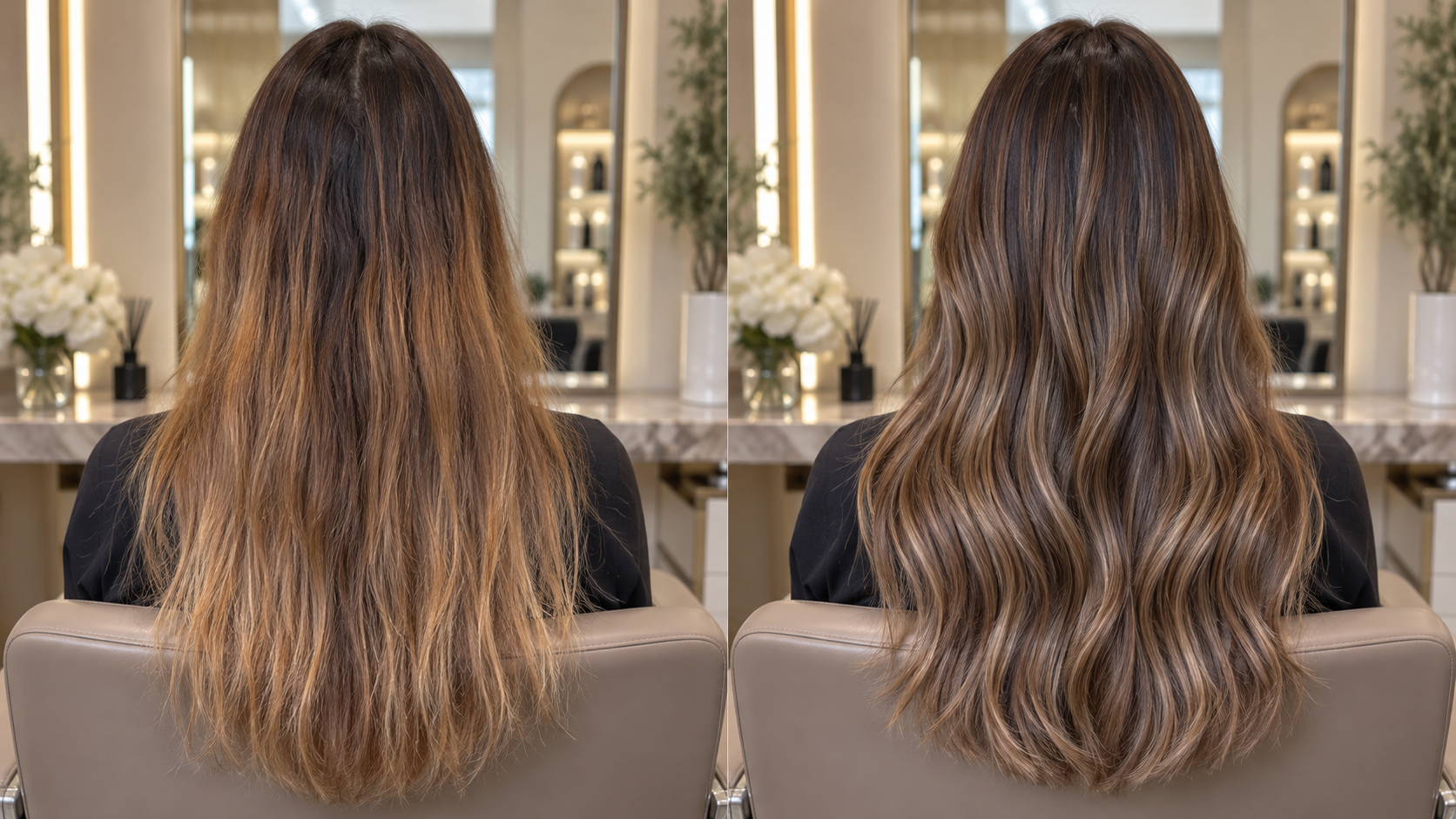
Would you like to refresh your current shade, cover grey hair or completely transform your appearance?
Choosing a hair colour involves more than selecting an attractive photograph. Your natural base, previous colour history, hair condition, skin tone and maintenance preferences can all influence what is realistically achievable.
At Hani Hair in JLT, Dubai, every colour service begins with an assessment of the client’s hair and desired result. This helps the stylist select an appropriate technique while protecting the condition of the hair as much as possible.
Why Is a Hair-Colour Consultation Important?
Two clients requesting the same shade may require completely different colour plans.
Before recommending a service, the stylist should consider:
- Your natural hair colour
- Existing artificial colour
- Grey-hair percentage
- Hair thickness, density and porosity
- Previous bleach, henna or straightening treatments
- The strength and elasticity of the hair
- Your skin tone and preferred finish
- How frequently you can attend maintenance appointments
- Whether you wear hair extensions
Clients should provide an honest colour history. Dark box dye, henna and repeated bleaching can affect how the hair lifts and may limit what can be achieved safely in one appointment.
Permanent Full-Head Colour
Permanent colour is applied throughout the hair to create an overall shade change or provide longer-lasting grey coverage.
It may be chosen to:
- Darken the natural hair
- Create a richer or more even colour
- Cover grey hair
- Change the overall tone
- Correct uneven or faded colour
Permanent colour changes the hair more significantly than a temporary toner. Although the colour remains through the treated lengths, new growth will gradually become visible at the roots.
A major change from dark hair to a much lighter shade usually requires lightening rather than colour alone.
Root Colour and Grey Coverage
A root-colour service focuses on the new growth rather than repeatedly colouring the entire length.
It is commonly used to:
- Cover newly grown grey hair
- Match natural roots to previously coloured lengths
- Maintain an existing permanent shade
- Refresh the hairline and parting
Applying permanent colour only where it is needed can help avoid unnecessary buildup through the already coloured lengths. The mid-lengths and ends may instead be refreshed with a gentler toner or gloss when appropriate.
Semi-Permanent and Demi-Permanent Colour
Semi-permanent and demi-permanent colours are generally used to adjust tone, deepen the shade or add richness without producing the same level of permanent change as traditional permanent colour.
Depending on the formula, they may help:
- Enhance the natural shade
- Refresh faded colour
- Add warmth or coolness
- Blend some grey hair
- Darken previously lightened hair
- Improve shine and colour dimension
These colours gradually fade through washing. They are not normally designed to lighten natural hair significantly.
Highlights
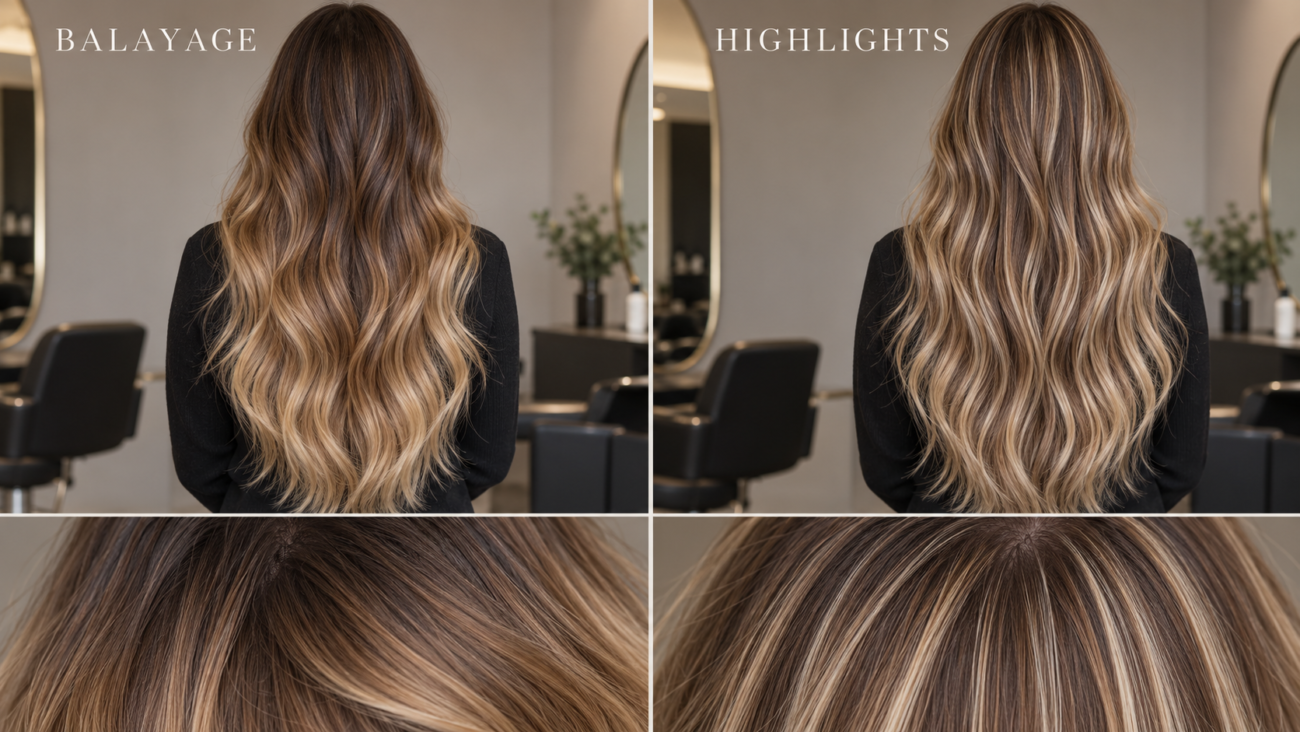
Highlights involve lightening selected sections of hair rather than colouring the entire head.
The placement, thickness and number of highlights determine the final effect. Fine highlights can create a soft, blended result, while larger sections can produce stronger brightness and contrast.
Common options include:
Full-Head Highlights
Highlights are placed throughout the front, sides, crown and back to create an overall lighter appearance.
Half-Head Highlights
Colour is concentrated through the top, sides and visible areas. This may be suitable for maintaining an existing highlighted look or adding brightness without colouring every section.
Face-Framing Highlights
Lighter pieces are positioned around the face to brighten the front of the hair. They may be added to highlights, balayage or another colour service.
Babylights
Babylights are very fine highlights designed to create soft, subtle brightness. They can produce a natural-looking blend but may require detailed and time-consuming placement.
Balayage
Balayage is a customised lightening technique designed to create a soft, blended transition between the natural base and lighter lengths.
Rather than producing an identical pattern on every client, the stylist plans the placement according to the haircut, natural colour and desired brightness.
Balayage may suit clients who want:
- A dimensional colour
- Softer root growth
- Lighter mid-lengths and ends
- A sun-kissed appearance
- Less obvious regrowth than traditional root-to-end highlights
- A customised blend of light and dark tones
Balayage does not automatically mean blonde. It can be created in caramel, beige, honey, chocolate, copper or other shades.
Although balayage may have softer regrowth, the lightened lengths still require toning and professional care.
Foilyage
Foilyage combines elements of balayage placement with foils.
The foils can provide additional lift and brightness while the placement maintains a blended, dimensional appearance. This technique may be considered when a client wants a lighter balayage-style result, particularly on a darker natural base.
The suitability of foilyage depends on the condition and colour history of the hair.
Ombré and Colour Melting
Ombré usually creates a more noticeable transition from darker roots to lighter ends. The contrast may be soft or dramatic depending on the desired result.
Colour melting uses carefully blended shades to create a smooth transition between the root, mid-lengths and ends. It can be used alongside balayage, highlights or corrective colour to prevent harsh lines.
These techniques require thoughtful shade selection so the colours complement one another as they blend.
Toners and Glosses
A toner does not replace a full lightening service. It is normally used after highlights or bleaching to refine the shade of the lightened hair.
A toner may help create:
- Cool ash tones
- Beige or creamy blondes
- Pearl or icy finishes
- Golden or honey shades
- Richer brunette tones
- Balanced copper or red shades
Toners gradually fade, especially with frequent washing, heat styling, sun exposure and unsuitable products.
A gloss may also refresh tone and add cosmetic shine. However, it cannot repair severely damaged hair or permanently prevent colour fading.
Blonde and Bleaching Services
Lightening dark hair requires the removal of natural or artificial pigment. The greater the desired change, the more carefully the process must be planned.
Reaching a very light blonde may require more than one appointment, particularly when the hair:
- Is naturally very dark
- Contains previous dark colour
- Has been treated with box dye or henna
- Is fragile or highly porous
- Has uneven bands of colour
- Has already been repeatedly lightened
Attempting to reach the lightest result in one session may place unnecessary stress on the hair. Preserving the condition of the hair should take priority over achieving a particular shade immediately.
Fashion and Creative Colours
Fashion colours include shades such as pink, blue, purple, green and vivid red.
Many vibrant colours require the hair to be lightened first so the shade can appear clearly. The final result and fading pattern depend on the starting level, porosity and colour formula.
Creative colours usually require:
- Regular refreshing
- Gentle washing
- Cooler water temperatures
- Colour-safe products
- Reduced heat styling
- Realistic expectations about fading
Pastel shades often fade faster because they contain less pigment.
Colour Correction
Colour correction is used when the existing hair colour is uneven, unwanted or significantly different from the desired result.
It may involve:
- Removing or reducing artificial pigment
- Correcting bands or patchiness
- Neutralising unwanted warmth
- Restoring depth to overlightened hair
- Darkening blonde hair gradually
- Balancing uneven roots and lengths
Colour correction can be complex and may require several stages or appointments. The exact plan cannot always be confirmed from a photograph because the stylist needs to assess the hair’s condition and perform tests where necessary.
Which Hair-Colour Service Is Right for You?
| Service | Main purpose | Typical result |
|---|---|---|
| Permanent colour | Overall shade change or grey coverage | An even, longer-lasting colour |
| Root colour | Maintain regrowth | Roots matched to the coloured lengths |
| Demi-permanent colour | Refresh or deepen tone | Softer colour that gradually fades |
| Highlights | Add selected lighter pieces | Brightness and dimension |
| Balayage | Create customised blended lightness | Soft roots with lighter lengths |
| Foilyage | Produce brighter balayage-style lightening | Stronger lift with a blended finish |
| Toner or gloss | Refine or refresh an existing shade | Adjusted tone and enhanced shine |
| Creative colour | Add vivid or pastel shades | A personalised fashion colour |
| Colour correction | Address an unwanted or uneven colour | A staged, customised correction |
The best option depends on your starting colour, hair condition and maintenance preferences.
Can Hair Colour Damage the Hair?
All oxidative colouring and lightening services involve some degree of chemical processing. The risk of unwanted damage increases when:
- The hair is lightened too aggressively
- Bleach overlaps previously lightened areas
- An unsuitable developer strength is used
- Fragile hair is processed without testing
- Chemical services are repeated too frequently
- Incompatible treatments are combined
- Excessive heat is used
- Home aftercare is neglected
No colourist should promise that a major chemical transformation is completely risk-free. A strand test may be recommended when the colour history or condition of the hair creates uncertainty.
Sometimes the safest plan is to divide the transformation across several appointments.
Hair Colour and Hair Extensions
If you wear extensions, tell your colourist before your appointment.
Natural hair and extension hair may absorb colour differently. Extension hair has already been processed and may react unpredictably to bleach, permanent colour or toners.
Whenever possible, the extension shade should be selected to match the planned colour rather than relying on major chemical changes after installation.
Bleach should not be applied over extension attachment points. Oils, colour removers and other products may also affect tapes, bonds or rings.
A combined colour-and-extension plan can help create a more seamless result.
How to Maintain Coloured Hair
To help preserve the colour and condition of your hair:
- Use shampoo and conditioner recommended for coloured hair
- Avoid washing more frequently than necessary
- Use comfortable rather than excessively hot water
- Apply heat protection before styling
- Limit unnecessarily high tool temperatures
- Use a suitable conditioning mask
- Protect the hair from strong sun exposure
- Rinse the hair after swimming
- Attend toner, gloss or root appointments as recommended
- Avoid attempting major colour corrections at home
Blonde, red, copper, pastel and vivid shades may require more frequent maintenance because fading and tonal changes can become visible sooner.
Book a Hair-Colour Consultation at Hani Hair Dubai
A successful colour transformation begins with a realistic plan.
At Hani Hair in JLT, Dubai, our stylists assess your natural colour, previous chemical history, hair condition and desired result before recommending a personalised service.
Whether you want grey coverage, highlights, balayage, a glossy brunette, a brighter blonde or a complete colour correction, we will explain the process, expected maintenance and what can be achieved safely.
Contact Hani Hair to arrange your professional hair-colour consultation in Dubai.
Related Posts
Balayage vs Highlights in Dubai: Which Is Right for You?
-
Posted by
Hani Hair
Ice Hair Extension Maintenance: What Happens During a Refill Appointment?
-
Posted by
How Many Hair Extensions Do You Need for a Full Head?
-
Posted by
Which Hair Extension Method Is Best for Fine or Thin Hair?
-
Posted by
Professional Blow-Dry and Hairstyling in Dubai: Styles, Benefits and What to Expect
-
Posted by
Women’s Haircuts in Dubai: How to Choose the Right Cut for Your Hair
-
Posted by
Different Types of Hair Treatments: Which One Is Right for Your Hair?
-
Posted by