Blog
Which Hair Extension Method Is Best for Fine or Thin Hair?
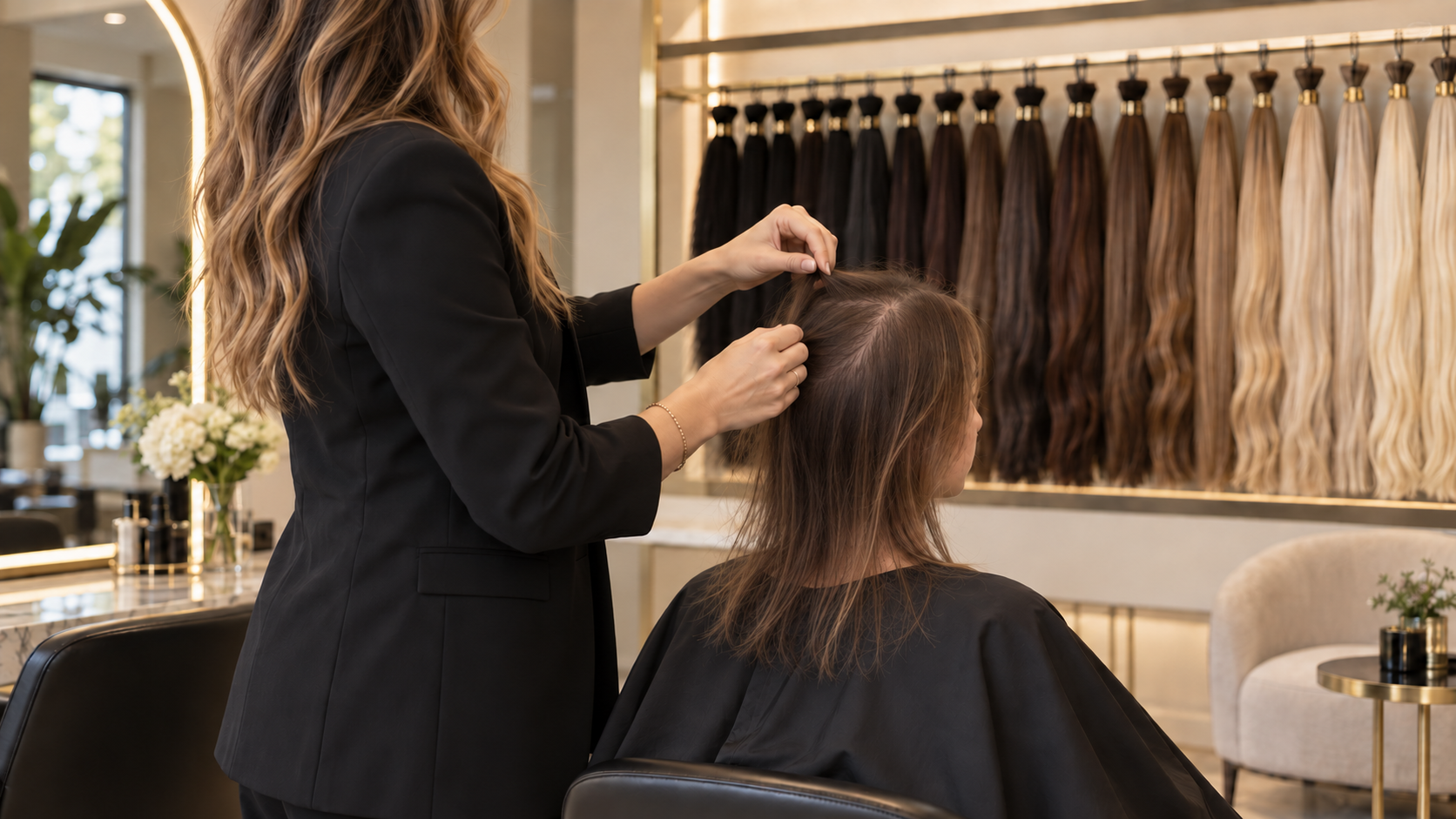
Fine or thin hair can benefit significantly from professionally selected hair extensions, but choosing the correct method is essential.
The attachment must be light enough for the natural hair to support, discreet enough to remain concealed and carefully positioned to avoid unnecessary tension. A method that works beautifully on thick hair may be too heavy or visible on a client with lower density.
At Hani Hair in JLT, Dubai, we assess the strength, density, texture and condition of the natural hair before recommending CombLine, Ice, tape-in, keratin or nano-ring extensions.
There is no single method that is best for every client. The safest and most natural-looking option depends on why the hair appears thin and what the client wants to achieve.
What Is the Difference Between Fine Hair and Thin Hair?
Fine hair and thin hair are not exactly the same.
Fine hair refers to the diameter of each individual strand. The strands themselves are smaller and may feel soft or delicate, even when the client has a reasonable amount of hair.
Thin hair refers to density—the number of hairs growing within a particular area. Someone can have relatively thick individual strands but still have low overall density.
Some clients have both fine strands and reduced density. This combination can make extension selection more challenging because the attachments must be light while also remaining hidden beneath limited natural coverage.
A professional consultation should therefore assess:
- The thickness of individual strands
- Overall density
- Strength and elasticity
- Areas of breakage
- Hairline and parting
- Scalp condition
- Previous colouring or bleaching
- Active or recent hair loss
- The client’s usual hairstyles
- The desired length and volume
Can Fine or Thin Hair Have Extensions?
Yes, many clients with fine or thin hair can wear extensions successfully when the application is properly customised.
However, having fine hair does not automatically mean that every extension method is suitable.
The stylist must control the amount of extension hair attached to each natural section. Heavy extensions placed on small or fragile sections can create excessive pulling. Attachments must also be positioned where there is enough natural hair to support and conceal them.
In some cases, the goal should be moderate volume rather than a dramatic increase in length. Adding too much hair may create unnecessary weight and make the transition from the natural hair more difficult to blend.
CombLine Extensions for Fine or Thin Hair
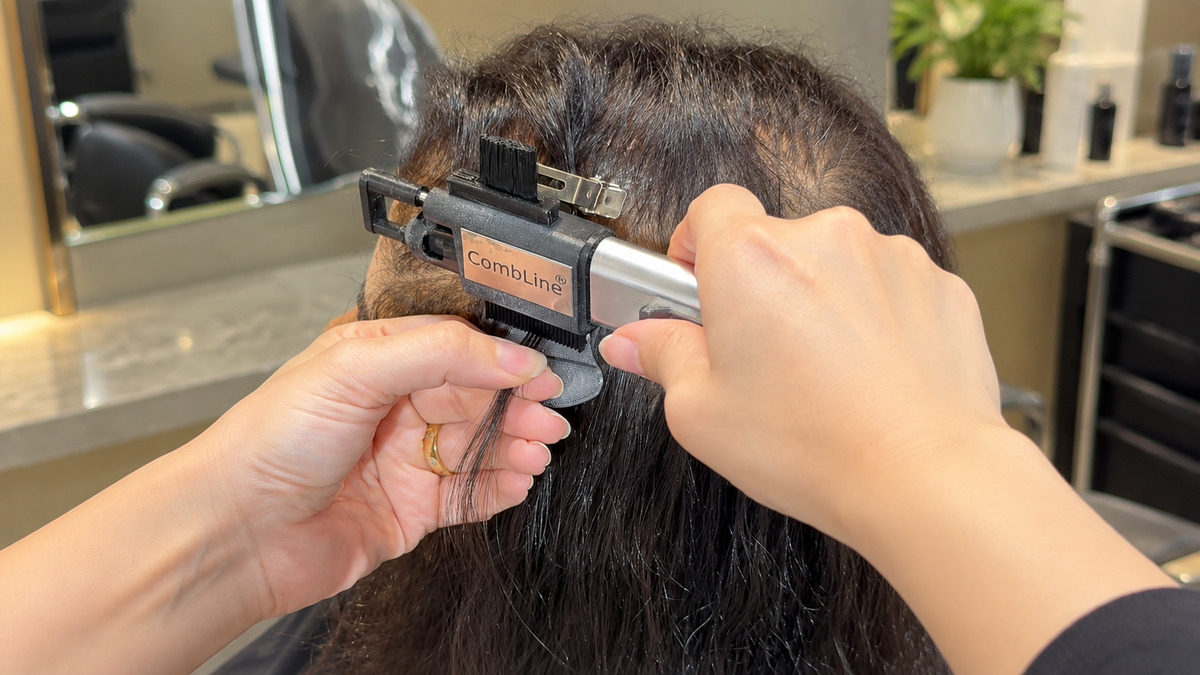
CombLine is a specialised hair-enhancement method designed to add hair to carefully selected areas.
Small amounts of extension hair are attached directly to suitable sections of natural hair using a specialised application tool. The connections are lightweight and discreet, allowing the stylist to work precisely in areas where traditional attachments may be difficult to conceal.
CombLine may be considered for:
- Fine or low-density hair
- Sparse areas around the sides
- Gaps near the hairline
- Thinning through selected areas
- Clients who require targeted volume
- Areas where larger attachments would be visible
One of the main advantages of CombLine is that it can add density without requiring a full-head extension application.
However, CombLine is not appropriate for every type of hair loss. The natural hair must still be strong enough to support the added strands. Active, unexplained or medically related hair loss should be assessed by an appropriate healthcare professional before a cosmetic extension service is considered.
Ice Extensions for Fine Hair
Ice extensions are applied strand by strand using a cold attachment method.
The connections can be made very small, allowing the stylist to customise the attachment size and extension weight according to the natural hair. This precision can be useful for fine hair and areas requiring discreet placement.
Ice extensions may be considered when the client wants:
- Very small attachment points
- Customised strand weight
- Precise placement
- Additional volume or length
- A cold installation method
- Greater flexibility around selected areas
Small attachments can be easier to conceal, but smaller does not automatically mean safer. Each extension strand must still be supported by the correct amount of healthy natural hair.
If the extension strand is too heavy for its supporting section, the small size of the attachment will not prevent tension or breakage.
Tape-In Extensions for Fine or Thin Hair
Tape-in extensions use wider, flat attachment sections rather than individual strands.
When properly fitted, tapes distribute the extension hair across a broader section of natural hair. Their flat shape can feel comfortable and create significant volume without requiring hundreds of individual attachments.
Tape extensions may work well when the client has enough healthy natural hair to support and conceal the tabs.
They may be considered for:
- Adding overall volume
- Creating additional length
- Clients who prefer a flatter attachment
- Relatively quick installation
- Reusable extension systems
However, tapes may be difficult to conceal in very sparse areas, particularly near the hairline or parting. The width of the attachment means placement must be carefully planned.
Invisible tapes can provide a more discreet appearance because hair covers more of the attachment surface. Nevertheless, even an invisible tape requires enough natural coverage around it.
Clients with extremely low density or significant breakage may require a smaller, more targeted method instead.
Keratin Extensions for Fine Hair
Keratin extensions are installed strand by strand using keratin-based bonds that are softened with controlled heat and shaped around suitable sections of natural hair.
The size and weight of the bonds can be customised. Smaller, lighter keratin bonds may be considered for fine hair when the natural strands are healthy enough to support them.
Keratin extensions may offer:
- Individual placement control
- Natural movement
- Customisable bond sizes
- Length and overall volume
- Flexible colour blending
The use of heat during professional installation does not automatically make keratin extensions unsuitable for fine hair. The greater concern is whether the bond size, extension weight and natural section have been correctly matched.
Keratin extensions may not be advisable when the hair is extremely fragile, severely overprocessed or actively breaking.
Nano-Ring Extensions for Fine Hair
Nano-ring extensions use very small rings to connect individual extension strands to the natural hair without adhesive or melted keratin.
Because the rings are smaller than traditional micro rings, they can be more discreet and may be considered for clients with fine hair.
Potential benefits include:
- Small attachment points
- No adhesive
- No heat during installation
- Individual strand placement
- Professional adjustment and maintenance
However, nano rings are not automatically suitable for all fine hair.
The ring and extension strand still create weight, and the attachment must be supported by enough healthy natural hair. Rings may also become visible when density is very low or when placed too close to exposed areas.
They should not be fitted to severely weakened strands simply because the attachment looks small.
Fine-Hair Extension Methods Compared
| Method | Attachment style | Possible advantage for fine hair | Important consideration |
|---|---|---|---|
| CombLine | Lightweight hair-on-hair connections | Precise volume in sparse or selected areas | Requires suitable healthy natural hair |
| Ice | Small cold-applied attachments | Highly customisable size and placement | Each strand must be correctly weighted |
| Tape-in | Wide, flat adhesive tabs | Distributes hair across a broader section | May be visible when density is very low |
| Keratin | Individually shaped keratin bonds | Customisable placement and natural movement | Fragile or overprocessed hair may not support bonds |
| Nano rings | Small metal-ring attachments | No adhesive or application heat | Rings and strands still create weight |
These comparisons are general. The correct choice cannot be made from the attachment size alone.
Which Method Looks Most Natural on Thin Hair?
The most natural-looking method is the one that can be concealed and supported by the client’s own hair.
CombLine may be useful for targeted density in sparse areas. Small Ice or customised keratin attachments can provide precise placement. Nano rings may work when the hair is strong enough and there is adequate coverage. Tapes may provide excellent overall fullness when the natural density can conceal the wider tabs.
Some clients may benefit from combining different methods. For example, a flatter method may be used through areas with greater density, while smaller attachments are selected for more visible sections.
Colour matching is equally important. Fine hair may reveal contrasting extension strands or attachments more easily, so multiple shades may be combined to create a softer and more natural blend.
When Are Hair Extensions Not Recommended?
Hair extensions are a cosmetic service and not a treatment for hair loss.
Installation may need to be postponed when the client has:
- Active or unexplained hair loss
- Severe breakage
- Very fragile or overprocessed hair
- Irritation, sores or inflammation of the scalp
- Insufficient density to conceal the attachments
- Hair that cannot safely support the required weight
- A medical scalp or hair condition that has not been assessed
Clients experiencing sudden shedding, bald patches, scalp pain or unexplained changes in density should seek medical advice before having extensions fitted.
Sometimes the safest professional recommendation is to avoid extensions temporarily, reduce the proposed amount of hair or select a removable option for occasional use.
Can Extensions Make Fine Hair Look Fuller Without Adding Length?
Yes. Extensions do not always need to create dramatically longer hair.
A customised volume application can be used to:
- Fill thin sides
- Improve the appearance of sparse ends
- Create a fuller perimeter
- Balance an uneven haircut
- Add density through selected areas
- Create more body without excessive weight
For many fine-haired clients, a moderate volume transformation looks more natural and is easier to maintain than adding a large amount of length.
How to Protect Fine Hair While Wearing Extensions
Fine hair requires careful aftercare and regular professional monitoring.
Clients should:
- Follow the recommended maintenance schedule
- Use an extension-friendly brush
- Support the roots while detangling
- Begin brushing from the ends
- Keep the attachment areas clean and dry
- Avoid sleeping with wet hair
- Use heat protection on the lengths
- Avoid tight hairstyles and excessive tension
- Keep oils and heavy products away from tapes and bonds
- Never remove or adjust attachments at home
Contact your stylist if you experience persistent discomfort, scalp irritation, excessive pulling, severe root tangling or attachments hanging from only a few natural hairs.
Which Extension Method Is Best for Your Fine Hair?
The best method depends on the condition and density of your natural hair, the areas requiring volume and the result you want to achieve.
CombLine may be appropriate for precise, targeted density. Ice and keratin extensions provide customised strand-by-strand placement. Tape extensions may create broader fullness when sufficient coverage is available. Nano rings may be considered for clients who prefer a small attachment without adhesive or application heat.
The method name alone does not determine whether an application is suitable. Correct strand weight, placement, coverage, maintenance and professional removal are equally important.
Book a Hair Extension Consultation at Hani Hair Dubai
Fine or thin hair requires a personalised approach rather than a standard full-head application.
At Hani Hair in JLT, Dubai, our specialists assess your natural-hair density, strand strength, scalp condition, haircut and desired result before recommending an extension method.
Whether you need targeted density with CombLine, small Ice attachments, customised keratin bonds, tapes, nano rings or a combination of techniques, we will explain the available options and create a placement plan designed specifically for your hair.
Contact Hani Hair to arrange a professional consultation and discover which hair-extension method may be most suitable for your fine or thin hair.
Related Posts
Balayage vs Highlights in Dubai: Which Is Right for You?
-
Posted by
Hani Hair
Why Are Ice and CombLine Extensions the Best Combination for Length, Volume and Thin Areas?
-
Posted by
Why Is CombLine Ideal for the Front, Top and Crown Areas With Low Hair Density?
-
Posted by
Hair Extensions for Short Hair: How Short Is Too Short?
-
Posted by
Do Hair Extensions Damage Your Natural Hair? The Honest Answer
-
Posted by
How Long Do Hair Extensions Last? Maintenance Schedules for Every Method
-
Posted by
6D Hair Extensions in Dubai: Manual vs Electric Application, Benefits and Aftercare
-
Posted by
Ice Hair Extension Maintenance: What Happens During a Refill Appointment?
-
Posted by
How Many Hair Extensions Do You Need for a Full Head?
-
Posted by
Professional Blow-Dry and Hairstyling in Dubai: Styles, Benefits and What to Expect
-
Posted by
Women’s Haircuts in Dubai: How to Choose the Right Cut for Your Hair
-
Posted by
Different Types of Hair Colour: Balayage, Highlights, Full Colour and More
-
Posted by