Blog
Do Hair Extensions Damage Your Natural Hair? The Honest Answer
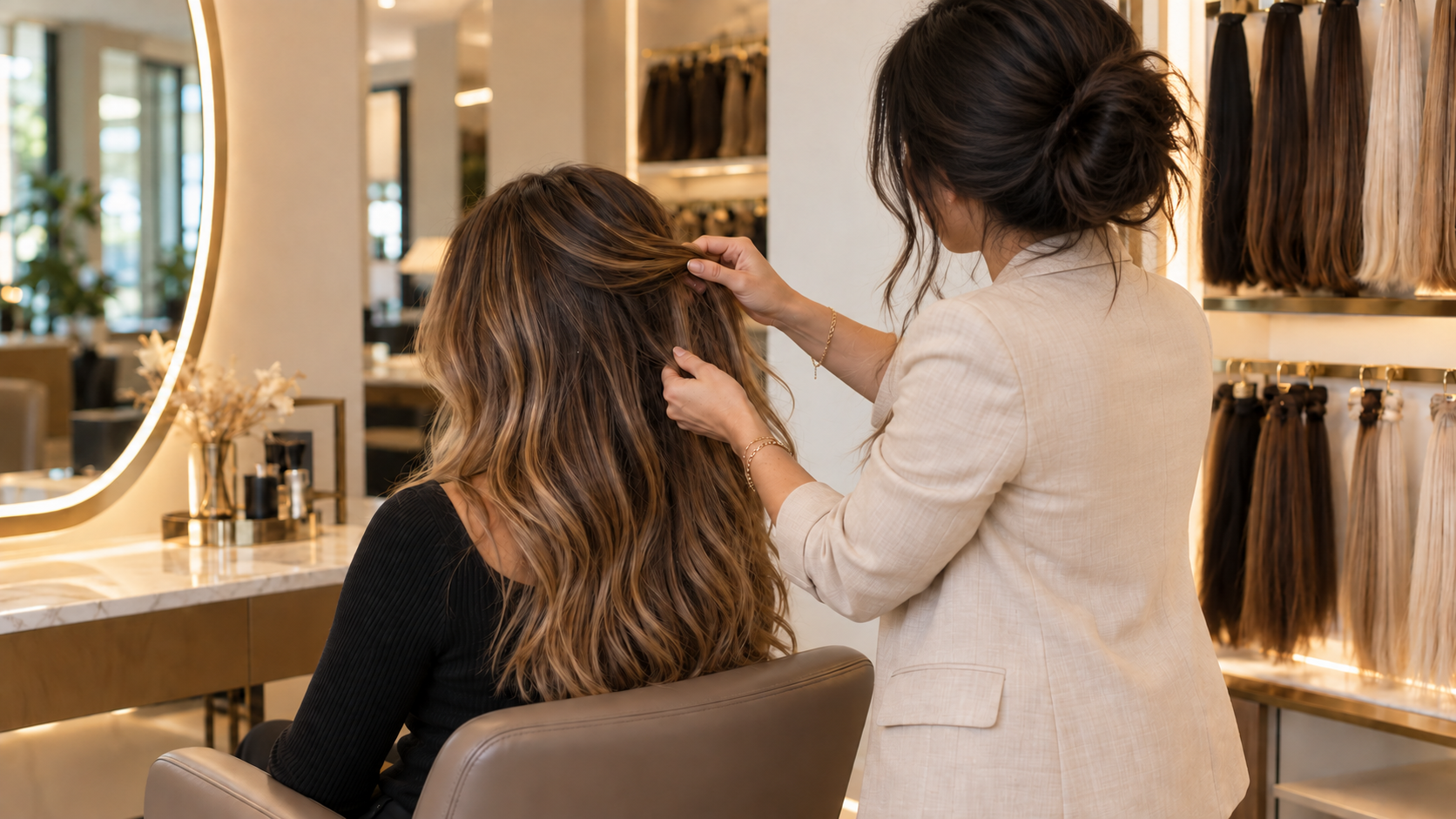
Hair extensions can create longer, fuller and more voluminous hair, but one question should always be discussed honestly before installation: can they damage your natural hair?
The honest answer is that no hair-extension method is completely risk-free. However, professionally selected, correctly weighted and carefully maintained extensions should not automatically cause significant damage.
Problems are more likely to occur when the wrong method or weight is chosen, the attachments are fitted incorrectly, maintenance is delayed, aftercare is unsuitable or the extensions are removed at home.
At Hani Hair in JLT, Dubai, every application begins with an assessment of the client’s natural hair. The method, number of pieces, strand weight and placement plan must be suitable for the hair—not simply based on the result the client wants.
Do Hair Extensions Always Cause Damage?
No. Wearing extensions does not automatically mean your natural hair will become weak, thin or damaged.
A suitable professional application should distribute the extension hair across sections that are strong enough to support it. The attachments should allow comfortable movement without excessive pulling, persistent pain or unnecessary tension.
However, extensions add weight to the natural hair. If that weight is unsuitable for the client’s density or strength, it can place too much pressure on individual hairs.
The condition of the natural hair before installation is therefore just as important as the application itself.
Professional Application vs Extension-Related Damage
A professional application should be customised according to:
- Natural-hair density
- Thickness of the individual strands
- Hair and scalp condition
- Areas of weakness or breakage
- Starting length
- Desired extension length
- Amount of volume required
- Chosen attachment method
- Client’s lifestyle and usual hairstyles
- Ability to follow the maintenance schedule
The stylist must decide how much extension hair each natural section can safely support. They must also leave enough space around the scalp, hairline and parting to allow movement and conceal the attachments.
Extension-related damage is more likely when these factors are ignored. A client may request very long, heavy hair, but the natural hair may only be suitable for a lighter or shorter transformation.
A responsible stylist should modify or decline an application when the requested result could place unnecessary stress on the natural hair.
How Unsuitable Weight Can Damage Natural Hair
One of the most important factors in a safe extension application is weight.
If an extension strand is too heavy for the natural section supporting it, the attachment may pull continuously on the roots. This can contribute to discomfort, breakage or excessive tension.
Using fewer pieces does not always make an application safer. If too much extension hair is concentrated into a small number of heavy attachments, each section of natural hair may carry more weight.
For example, achieving considerable length with too few extension strands can also create an unnatural gap between the client’s shorter hair and the longer extensions. More carefully distributed pieces may be required to create a smoother blend and more balanced weight.
At the same time, adding more pieces is not automatically better. The total quantity must remain appropriate for the client’s density, strength and available placement area.
The goal is not to install the highest possible number of extensions. It is to create the desired result using a weight and distribution that the natural hair can reasonably support.
Can Incorrect Placement Cause Damage?
Yes. Even high-quality extension hair may cause problems if the placement is unsuitable.
Attachments fitted too close to the scalp may feel tight and restrict natural movement. They can also create discomfort when sleeping or tying the hair up.
Extensions placed too close to the hairline, temples or parting may become visible and can place pressure on naturally delicate areas. These sections often require smaller, lighter attachments or may need to be avoided entirely.
Poor sectioning can also create uneven tension. If the natural section is too small, it may not provide enough support. If it is too large or untidy, the attachment may not sit or move correctly.
Professional placement should account for the direction in which the natural hair grows and the hairstyles the client usually wears.
How Poor Aftercare Can Lead to Damage
Even a well-fitted application requires suitable home care.
Hair extensions can become tangled, matted or stressed when they are brushed roughly, left wet for long periods or repeatedly pulled into tight hairstyles.
Common aftercare mistakes include:
- Brushing aggressively from the roots
- Pulling through knots without supporting the attachments
- Sleeping with wet or damp hair
- Going to bed without detangling the lengths
- Applying oils or heavy products directly to attachments
- Using excessive heat near bonds or tapes
- Wearing tight ponytails that pull against the roots
- Allowing the roots to become tangled together
- Ignoring attachments that feel uncomfortable or loose
- Trying to cut, glue or repair extensions at home
An extension-friendly brush should be used gently, beginning at the ends and gradually moving upward. Supporting the attachment area with one hand can reduce unnecessary pulling while brushing.
Before sleeping, the hair should be completely dry and secured in a loose braid or low ponytail to reduce friction and tangling.
Why Delayed Maintenance Can Damage the Hair
Natural hair continues to grow while extensions are being worn. As the roots grow, the attachment moves farther away from the scalp.
When maintenance is delayed, the attachments have more room to twist, move and become tangled with neighbouring sections. The added distance can also create greater leverage on the natural hair.
Warning signs that maintenance may be overdue include:
- Attachments sitting far from the scalp
- Increasing root tangling
- Bonds twisting or changing direction
- Tapes becoming visible or folding
- Rings sliding down the hair
- Extensions pulling during brushing
- Difficulty separating the attachment rows
- Several loose or hanging pieces
Each method has a different maintenance schedule. At Hani Hair, Ice and keratin extensions may commonly be worn for approximately two to three months depending on natural hair growth and condition. Tape extensions are ideally checked or refitted after approximately one month, while ring and 6D methods may require maintenance after approximately one to two months. CombLine extensions are designed for shorter wear and may last up to around three weeks.
These timings are general guidelines. Faster hair growth, fine hair, oily roots, lifestyle and home care can all affect when maintenance is required.
Waiting longer simply because the attachments still appear secure is not always advisable. A professional should assess the roots before severe tangling develops.
Is Shedding During Removal a Sign of Damage?
Not necessarily.
It is normal to shed some natural hair every day. When extensions are attached, some of these naturally released hairs remain trapped inside the bond, tape or ring instead of falling away.
During professional removal, the retained hairs become visible at the same time. This can make the amount appear greater than normal, especially after several weeks or months.
Natural shedding should not automatically be confused with breakage.
Shed hairs usually have completed their natural growth cycle, while broken hairs may appear shorter, uneven or snapped through the lengths. A professional stylist can examine the hair during removal and explain what is being observed.
Can Removing Extensions at Home Cause Damage?
Yes. Home removal is one of the most avoidable causes of extension-related damage.
Pulling, cutting, crushing or peeling away attachments can remove natural hair with them. Using an unsuitable solvent, excessive pressure or uncontrolled heat can also weaken the hair.
Different extension methods require different professional removal techniques. Tape extensions need the correct removal solution, while keratin, Ice, ring, 6D and other systems require their appropriate tools and procedures.
Extensions should never be forced out when they do not release easily. Careful removal is just as important as careful installation.
Are Extensions Safe for Fine or Thin Hair?
Fine hair may be suitable for extensions, but it requires a particularly careful assessment.
Fine individual strands are not always the same as low density. Some clients have fine hair but a large number of strands, while others have both fine hair and limited density.
The stylist should assess whether the natural hair can support and conceal the proposed attachments. Smaller or lighter bonds may be considered, but small attachments must still be supported by enough healthy natural hair.
Clients with very fragile hair, severe breakage, active or unexplained hair loss, irritated scalps or insufficient density may not currently be suitable for extensions.
Hair extensions are a cosmetic service and should not be used to hide or treat a medical hair-loss condition. Unexplained or rapidly progressing hair loss should be assessed by a qualified medical professional before installation.
Warning Signs You Should Not Ignore
Hair extensions may feel noticeable immediately after installation, but they should not cause persistent pain.
Contact your stylist if you experience:
- Ongoing pain or strong pulling
- Headaches caused by tight attachments
- Redness, sores or scalp irritation
- Attachments hanging from only a few hairs
- Sudden excessive slipping
- Severe tangling or matting at the roots
- Visible breakage around attachment points
- Persistent discomfort when sleeping
- Thinning around the temples or hairline
Do not wait until the next scheduled appointment if something feels wrong. Early adjustment or removal may prevent a minor issue from becoming more serious.
How to Reduce the Risk of Extension Damage
The risk can be reduced through:
- A detailed consultation
- Choosing a suitable extension method
- Using an appropriate length and total weight
- Correct strand or section sizing
- Careful placement away from delicate areas
- High-quality extension hair and attachment materials
- Gentle washing, drying and brushing
- Keeping the roots separated and free from matting
- Attending maintenance appointments on time
- Reporting discomfort promptly
- Professional removal and reapplication
- Taking a break or modifying the application when necessary
The healthiest extension plan is not always the most dramatic one. A slightly shorter or lighter application may provide a more natural result and be more appropriate for the client’s own hair.
The Honest Conclusion
Hair extensions do not automatically damage natural hair, but they are not completely risk-free.
A successful application depends on the condition of the natural hair, the suitability of the chosen method, the weight of each attachment, professional placement, correct aftercare and timely maintenance.
Damage is more likely when extensions are too heavy, placed incorrectly, neglected between appointments or removed without professional help.
At Hani Hair in JLT, Dubai, our extension specialists assess your natural hair before recommending a method, length and quantity. We customise the attachment size, strand weight and placement to create a comfortable result that blends naturally with your hair.
Contact Hani Hair to arrange a professional consultation and discover which extension method may be suitable for your hair.
Related Posts
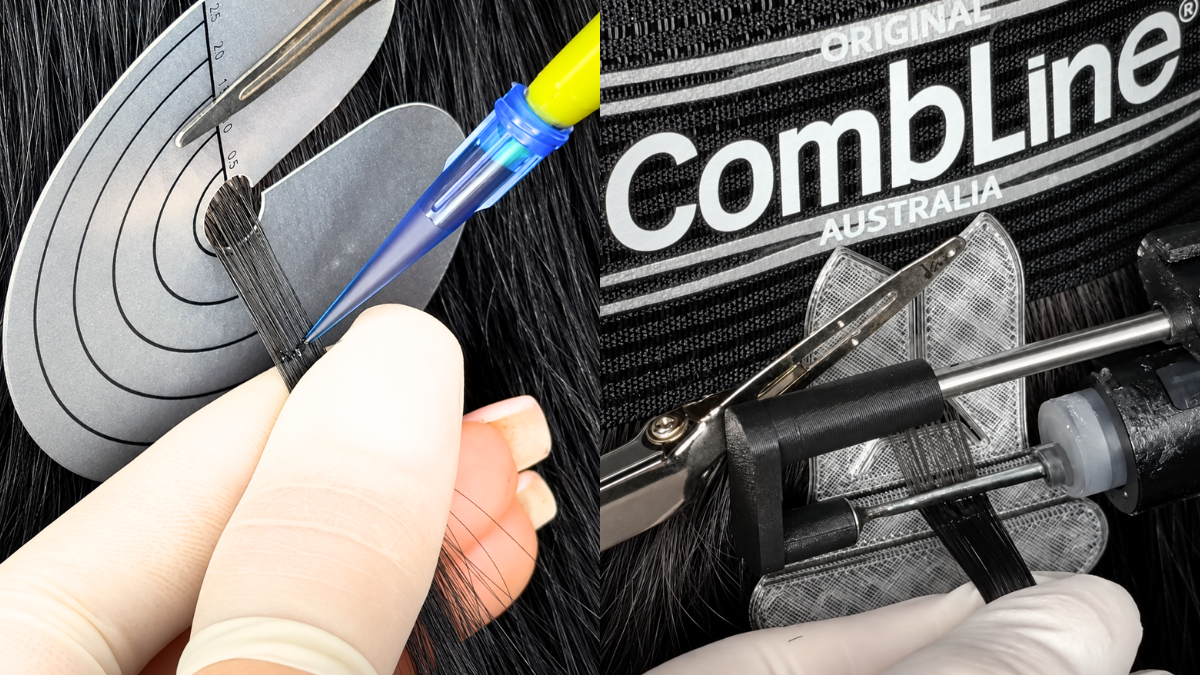
Why Are Ice and CombLine Extensions the Best Combination for Length, Volume and Thin Areas?
-
Posted by
Hani Hair
Why Is CombLine Ideal for the Front, Top and Crown Areas With Low Hair Density?
-
Posted by
Hair Extensions for Short Hair: How Short Is Too Short?
-
Posted by
How Long Do Hair Extensions Last? Maintenance Schedules for Every Method
-
Posted by
6D Hair Extensions in Dubai: Manual vs Electric Application, Benefits and Aftercare
-
Posted by
Ice Hair Extension Maintenance: What Happens During a Refill Appointment?
-
Posted by
How Many Hair Extensions Do You Need for a Full Head?
-
Posted by
Which Hair Extension Method Is Best for Fine or Thin Hair?
-
Posted by
Ice vs Keratin Hair Extensions: Which Method Is Right for You?
-
Posted by
Clip-In Hair Extensions in Dubai: Instant Length and Volume Without Commitment
-
Posted by
Tape-In Hair Extensions in Dubai: Types, Benefits, Application and Aftercare
-
Posted by
Ring Hair Extensions in Dubai: Micro Rings, Nano Rings and Everything You Need to Know
-
Posted by