Blog
Hair Extensions for Short Hair: How Short Is Too Short?
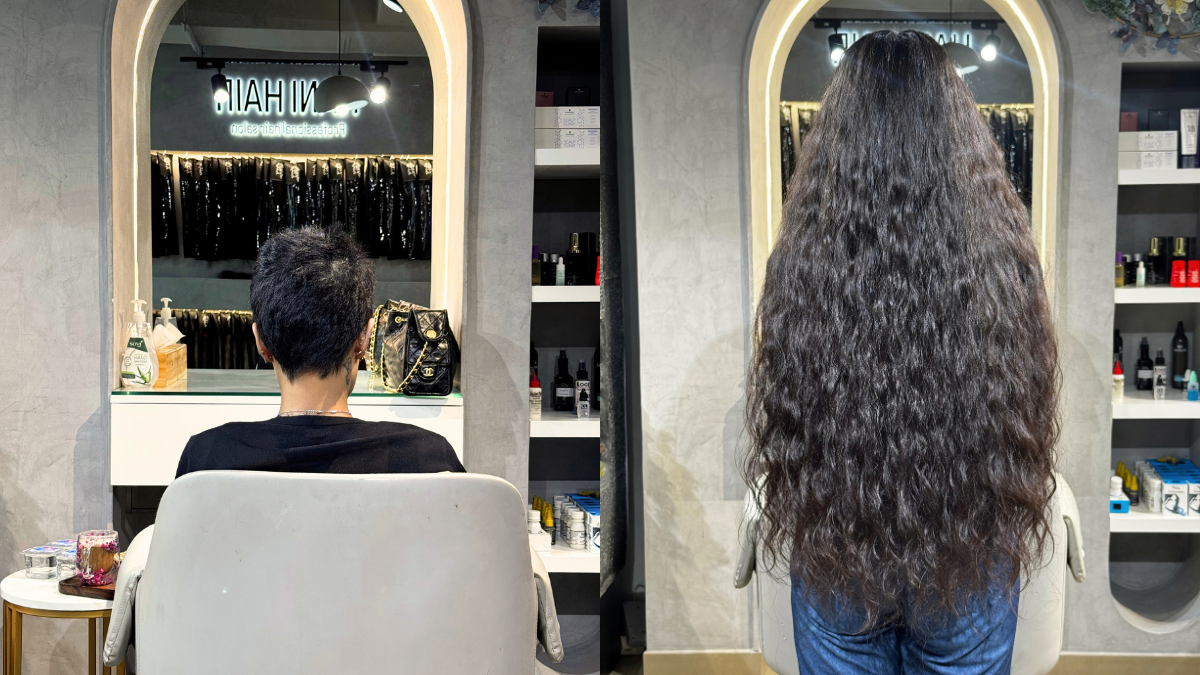
Can hair extensions transform short hair into long, naturally blended hair?
In many cases, yes—but successful short-hair transformations require careful planning. The natural hair must be long and dense enough to conceal the attachment points and blend with the added length. The shorter and more structured the haircut is, the more detailed the installation and finishing work usually become.
At Hani Hair in JLT, Dubai, we assess the client’s natural length, density, haircut, condition and desired result before recommending an extension method. Rather than relying on one fixed minimum length, we determine whether the hair can safely support the extensions and provide enough coverage for a natural-looking finish.
What Is the Minimum Hair Length for Extensions?
As a general guide, natural hair measuring approximately 8–10 centimetres may be long enough for certain professional extension methods. However, this does not mean that every client with hair of this length will be suitable.
The minimum length depends on several factors:
- Natural-hair density
- Strength and condition of the hair
- Location of the shortest layers
- Shape of the existing haircut
- Extension method and attachment size
- Desired extension length
- Preferred hairstyles
- Amount of coverage over the attachments
A client with short but dense hair may have enough coverage to conceal small attachments. Another client with longer but very fine or sparse hair may not have sufficient density for the same application.
For this reason, suitability should be determined during a professional consultation rather than by measuring the hair alone.
Why Is Coverage Important?
Every extension requires an attachment point. Depending on the method, this may be an Ice capsule, keratin bond, tape tab, ring, weft or another type of connection.
There must be enough natural hair above and around each attachment to keep it concealed during normal movement. Attachments placed too close to the hairline, parting or exposed areas may become visible—especially when the hair is tied up.
Short hair can make coverage more challenging because there is less natural length available to fall over the connections. The stylist must therefore plan each row carefully and avoid placing extensions in areas where they cannot be properly concealed.
Some clients may need to keep a particular parting or avoid very high ponytails after the installation. These limitations should be discussed before the service.
Which Extension Methods Are Suitable for Short Hair?
The best method depends on the natural hair and the transformation being requested.
Ice Hair Extensions
Ice extensions can be particularly useful for short hair because their attachment points can be made very small. This gives the stylist greater flexibility when working around short layers or areas that require discreet placement.
The small capsules do not remove the need for adequate coverage. Each attachment must still be supported by a suitable amount of healthy natural hair.
Keratin Hair Extensions
Keratin extensions may also be used on short hair when the bonds are appropriately sized and carefully positioned.
Because they are installed strand by strand, keratin extensions allow the stylist to customise the distribution and direction of the added hair. However, the natural hair must be long and dense enough to conceal the bonds.
Tape-In Extensions
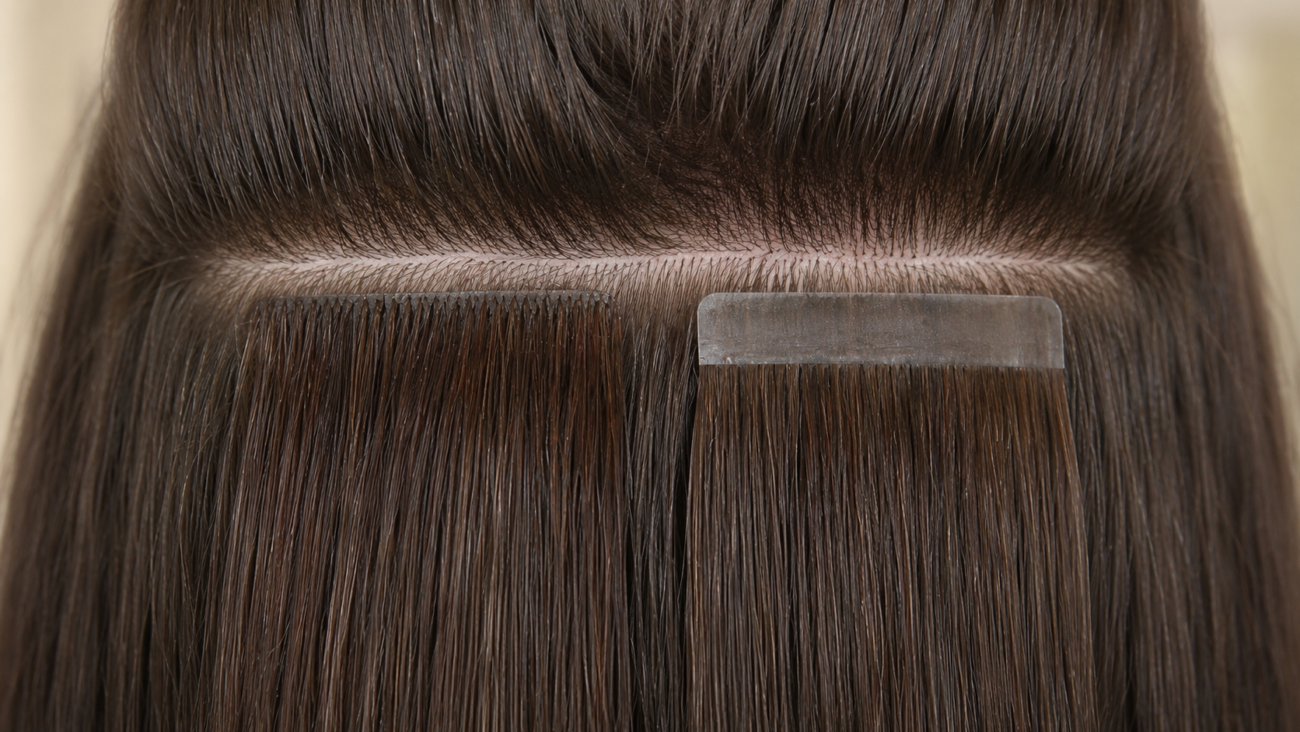
Tape extensions have wider attachment points than individual Ice or keratin strands. They can create length and fullness efficiently, but very short hair may not always provide enough coverage for the tabs.
Tapes may still be suitable when the natural hair is sufficiently dense and the haircut allows the attachments to remain hidden.
Other Methods
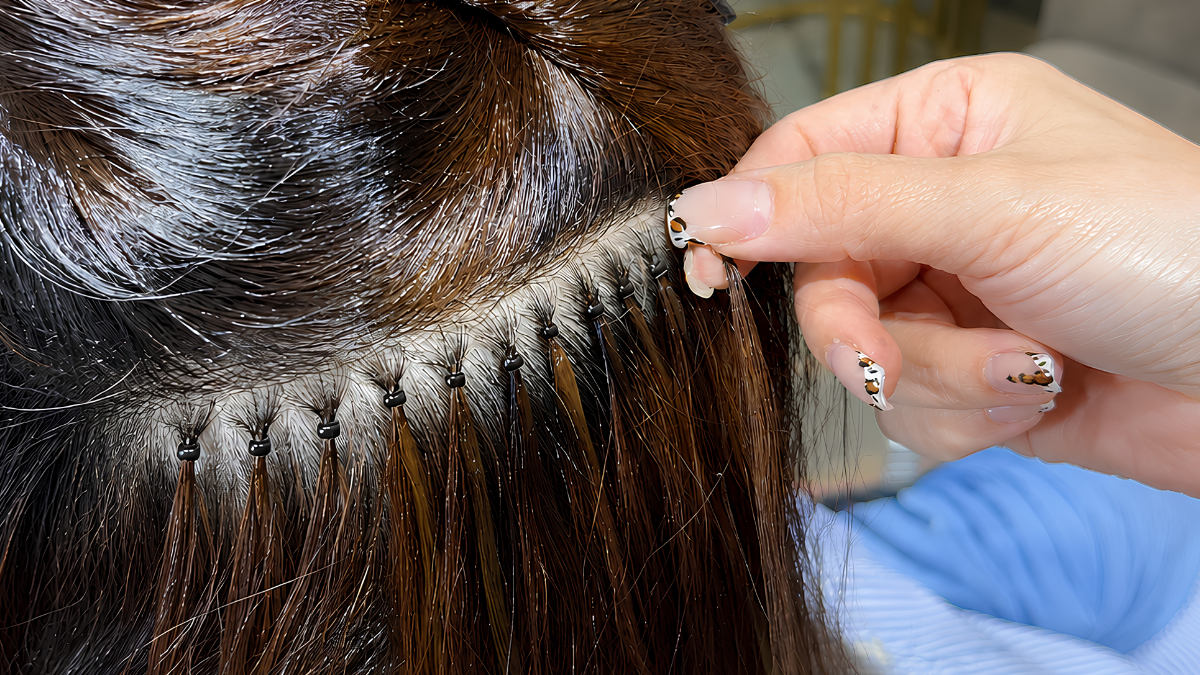
Ring, weft, 6D and CombLine extensions may also be considered in selected cases. CombLine can be particularly helpful for adding density to small areas, but it is not necessarily intended to create every full-length transformation on its own.
No extension method is automatically best for all short hair. The decision should be based on the client’s individual starting point.
Why Do Short-Hair Transformations Need More Strands?
A client with medium-length hair may already have enough natural length through the sides and ends to blend with extensions. In this situation, the added hair mainly provides extra length and volume.
Short hair is different. The stylist must create a gradual transition from the shortest natural layers into the longer extension hair. If too few strands are installed, the natural haircut may sit visibly on top of the extensions, creating a noticeable step or “shelf.”
Additional strands may be required to:
- Fill the sides and back evenly
- Prevent gaps between the natural hair and extensions
- Soften a blunt perimeter
- Balance short or uneven layers
- Create enough density through the ends
- Support the final blending haircut
For a standard length-and-volume transformation, approximately 200 strands may be used as a general reference. Short or difficult transformations may require more, depending on the client’s density, haircut and desired length.
The number should never be selected from a photograph alone. Strand size and weight also matter: 200 very small strands do not necessarily provide the same amount of hair as 200 larger strands.
How Does the Desired Length Affect the Quantity?
The greater the difference between the natural hair and the desired extension length, the more extension hair is normally needed.
For example, transforming a short bob into moderately longer hair may require fewer strands than transforming the same haircut into very long hair. A dramatic length difference needs greater density throughout the head to make the transition appear natural.
Using very long extensions without enough pieces may leave the ends looking thin or disconnected. Adding the correct quantity helps create a fuller, more balanced result from the roots to the ends.
In some cases, recommending a slightly shorter finished length can produce a more convincing and manageable transformation.
Why Is the Blending Haircut So Important?
Installation is only one part of a successful short-hair transformation. The extensions must also be professionally cut and blended.
A stylist may use layering, point cutting or other finishing techniques to soften the natural perimeter and connect it with the extension hair. The objective is not simply to make the natural hair shorter; it is to distribute the weight and create a gradual transition.
Blending is especially important when the starting haircut is:
- A blunt bob
- A short layered cut
- Uneven or asymmetrical
- Very thick through the ends
- Short around the crown or sides
Without proper finishing, even correctly installed extensions may appear separate from the natural hair.
Can Extensions Be Applied to a Pixie Cut?
Some longer pixie cuts may be suitable for a carefully planned transformation, particularly when the hair has sufficient length and density at the crown and sides.
Very short pixie cuts can be more difficult. If the hair cannot cover the attachments, adding long extensions may not produce a discreet or practical result. The difference between the natural hair and the extensions may also be too dramatic to blend convincingly.
In this situation, the stylist may recommend:
- Allowing the natural hair to grow longer first
- Choosing a shorter extension length
- Adding limited volume rather than dramatic length
- Using a temporary hairpiece or alternative system
- Planning the transformation in stages
Waiting for a little more growth can sometimes make a significant difference to the final result.
Can Fine, Short Hair Support Extensions?
Fine hair and short hair must be assessed carefully. The stylist needs to determine whether there is enough healthy natural hair to support the weight of the extensions.
Very small attachments may improve discretion, but they must not be placed onto sections that are too weak or too thin. Using excessive weight can cause pulling, discomfort or breakage.
Extensions may need to be postponed or modified when the client has:
- Active or unexplained hair loss
- Severe breakage
- Extremely fragile or overprocessed hair
- An irritated or unhealthy scalp
- Insufficient density to conceal the attachments
Hair extensions are a cosmetic service and are not a treatment for hair loss or a medical scalp condition.
Why Does the Consultation Matter?
Photographs can help communicate the desired result, but they cannot show everything a stylist needs to assess.
During an in-person consultation, the stylist should examine:
- The shortest and longest areas of the haircut
- Density around the crown, sides and hairline
- Strength and condition of the natural hair
- Whether the attachments can remain concealed
- The quantity and weight the hair can support
- The most suitable extension method
- The realistic finished length
- The cutting and blending required
Colour matching is also essential. Multiple extension shades may be combined to reproduce natural highlights, lowlights or tonal variation.
Book a Short-Hair Extension Consultation in Dubai
Short hair does not automatically prevent you from wearing extensions, but it requires a carefully customised approach.
At Hani Hair in JLT, Dubai, our extension specialists assess your natural length, density, condition and haircut before creating an individual placement plan. We offer several professional methods, including Ice, keratin, tape, ring, weft, 6D and CombLine extensions.
The attachment size, strand quantity, extension length, colour combination and final haircut are selected to create the most natural and balanced result possible.
Contact Hani Hair to arrange your consultation and discover which hair-extension method is suitable for your short hair.
Related Posts
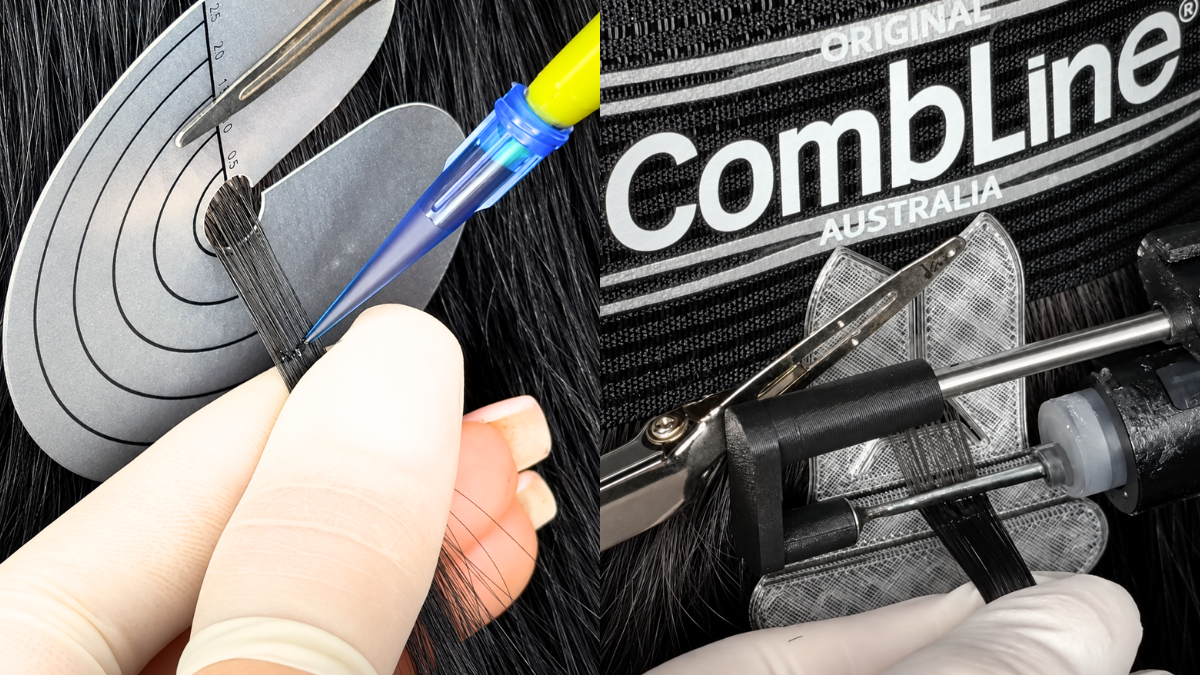
Why Are Ice and CombLine Extensions the Best Combination for Length, Volume and Thin Areas?
-
Posted by
Hani Hair
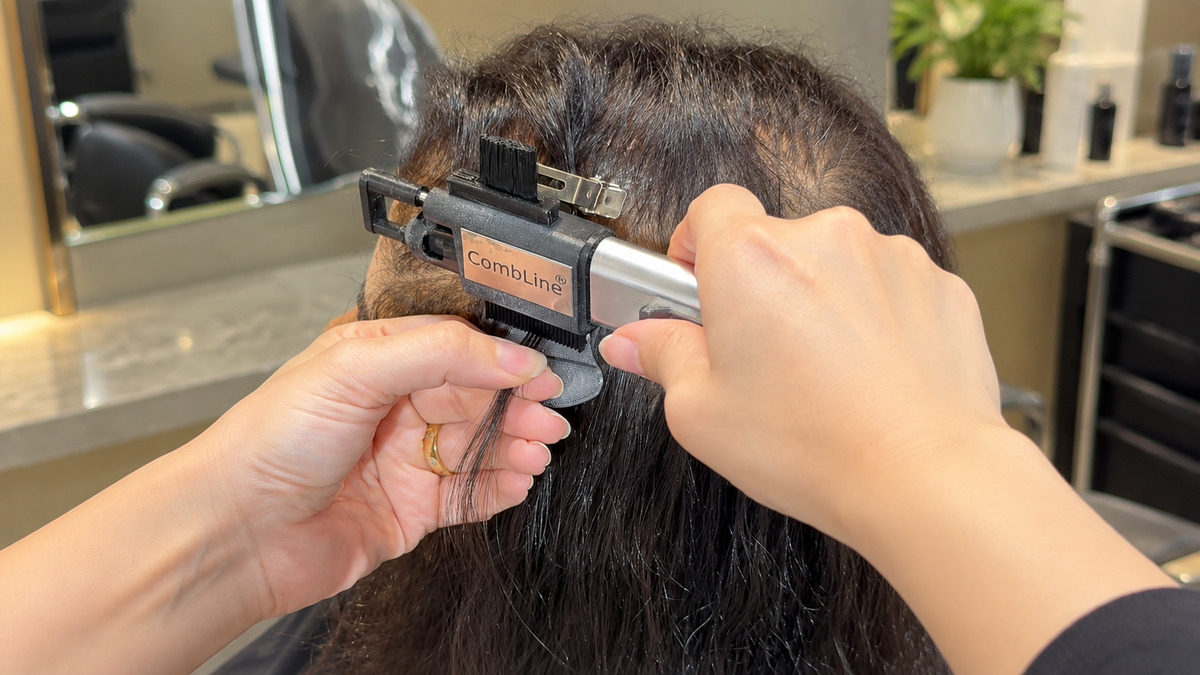
Why Is CombLine Ideal for the Front, Top and Crown Areas With Low Hair Density?
-
Posted by
Do Hair Extensions Damage Your Natural Hair? The Honest Answer
-
Posted by
How Long Do Hair Extensions Last? Maintenance Schedules for Every Method
-
Posted by
6D Hair Extensions in Dubai: Manual vs Electric Application, Benefits and Aftercare
-
Posted by
Ice Hair Extension Maintenance: What Happens During a Refill Appointment?
-
Posted by
How Many Hair Extensions Do You Need for a Full Head?
-
Posted by
Which Hair Extension Method Is Best for Fine or Thin Hair?
-
Posted by
Ice vs Keratin Hair Extensions: Which Method Is Right for You?
-
Posted by
Clip-In Hair Extensions in Dubai: Instant Length and Volume Without Commitment
-
Posted by
Tape-In Hair Extensions in Dubai: Types, Benefits, Application and Aftercare
-
Posted by
Ring Hair Extensions in Dubai: Micro Rings, Nano Rings and Everything You Need to Know
-
Posted by