Blog
How Many Hair Extensions Do You Need for a Full Head?
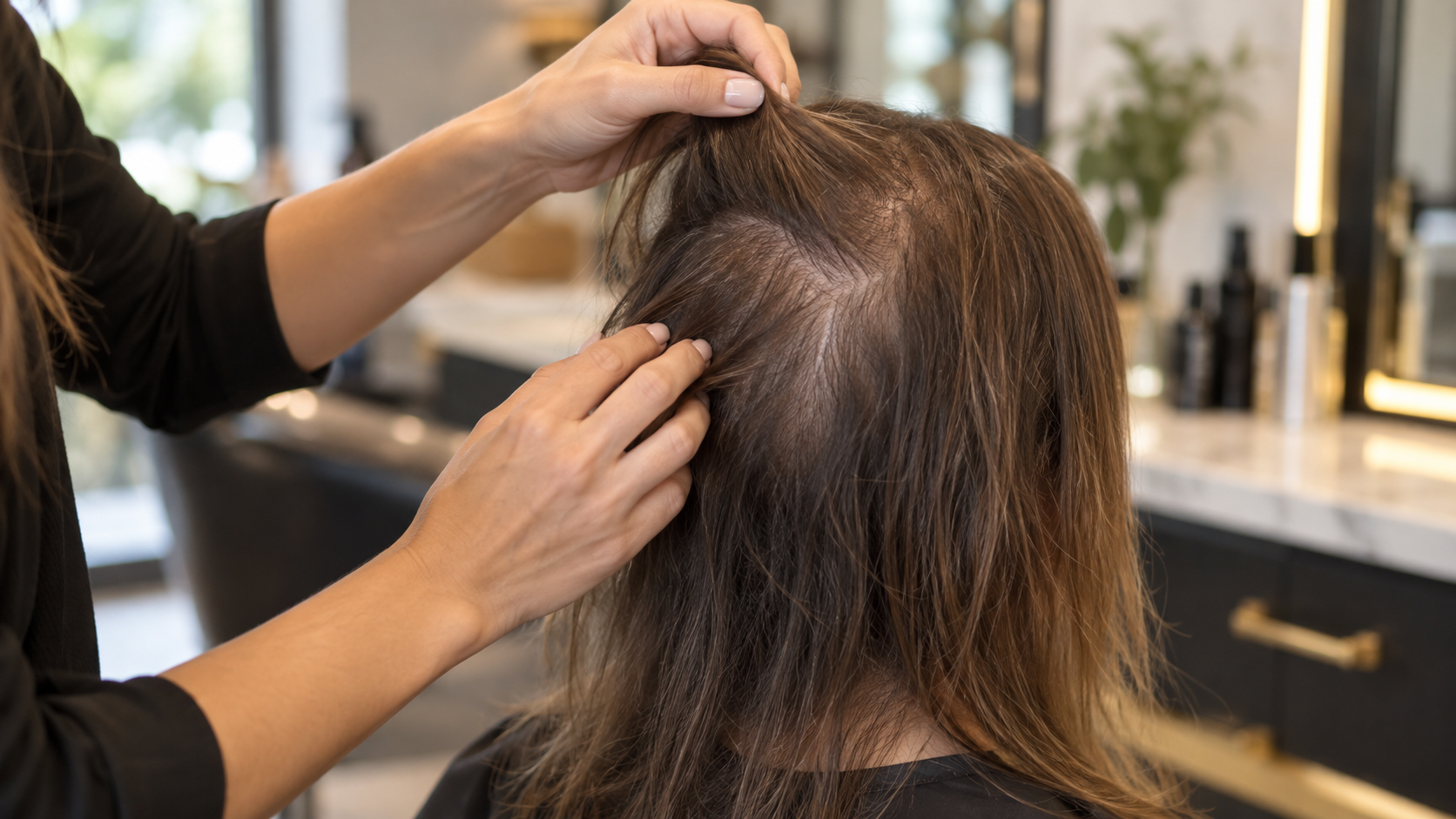
One of the first questions clients ask before a hair-extension appointment is: How many extensions will I need?
There is no single number that suits every client. The correct quantity depends on the natural hair’s density and length, the desired result, the size and weight of each extension strand, and how much longer the finished hair will be.
At Hani Hair in JLT, Dubai, approximately 200 individual extension strands is a standard starting point for many clients who want to add both length and volume. Clients who want volume without a significant increase in length may need a minimum of approximately 100 strands, although additional pieces may be required depending on the natural hair and desired fullness.
These numbers apply to individual strand-by-strand methods such as Ice or keratin extensions. Tape, weft and other methods are measured differently and should not be compared by piece count alone.
Is 200 Strands Enough for a Full Head?
For many clients, approximately 200 individual strands can create a full-head transformation with additional length and volume.
This amount may be suitable when:
- The natural hair has average density
- The starting length is medium or long
- The client wants a moderate increase in length
- The haircut does not have a very heavy or blunt perimeter
- The extension strands contain an appropriate amount of hair
- The desired result is natural rather than extremely full
However, 200 strands should be treated as a general starting point rather than a guaranteed number for every client.
A client with short, thick or bluntly cut hair may need considerably more strands to create a seamless transition. A client with fine, lower-density hair may require fewer or lighter strands because the natural hair must be able to support the application safely.
How Many Extensions Are Needed for Volume Only?
Clients who are satisfied with their existing length may use extensions only to create more fullness.
For the best overall result, a volume application may begin with approximately 100 individual strands. More pieces may be required if the client has:
- Very thin ends
- Reduced density through the sides
- Gaps around the perimeter
- A layered or uneven haircut
- A naturally thick top section but sparse lengths
- A preference for a significantly fuller finish
A partial application may also be used in selected areas rather than throughout the entire head.
For example, some clients mainly require additional density through the sides and ends. In this situation, the stylist can concentrate the strands where they will make the greatest visual difference.
The objective is not to install as many extensions as possible. It is to add enough hair to create the desired fullness while keeping the weight appropriate for the natural hair.
Why Does Longer Extension Hair Require More Strands?
The longer the desired extension length, the more hair is generally required to create a full and natural-looking result.
Imagine extending shoulder-length hair to a moderately longer length. The natural hair already covers part of the distance, so the extensions mainly need to continue the shape and add fullness through the lower lengths.
If the same client wants very long hair, the extension hair must create density across a much greater distance. Using too few strands can make the ends look thin, separated or transparent.
This may create a visible difference between the client’s natural hair and the added length.
Longer extensions often require more pieces because the stylist must:
- Maintain fullness from the roots to the ends
- Prevent the lower lengths from looking sparse
- Blend the natural haircut into the extension hair
- Balance the front, sides and back
- Distribute the added length evenly
- Create enough density for styling and movement
Therefore, a client requesting very long extensions may require more than the standard 200 strands to achieve the best result.
How Does Natural-Hair Density Affect the Quantity?
Natural density is one of the most important factors when calculating the number of extensions.
Fine or Lower-Density Hair
Clients with fine or lower-density hair may need fewer strands or smaller, lighter attachments.
Installing a large amount of heavy extension hair does not necessarily create a better result. The client must have enough healthy natural hair to support and conceal each attachment.
For fine hair, the stylist may focus on:
- Lightweight extension strands
- Smaller attachments
- Strategic placement
- Moderate length
- Targeted volume
- Protecting weaker areas
- Ensuring the attachments remain concealed
Very fragile hair, active hair loss or insufficient density may mean that a full-head application is not currently suitable.
Medium-Density Hair
Medium-density hair may often suit a standard application of approximately 200 strands when the client wants both length and volume.
The final quantity still depends on the starting length, haircut, extension length and fullness requested.
Thick or High-Density Hair
Thick natural hair frequently requires more extension hair to produce a balanced result.
If too few strands are installed, the client’s natural hair may look fuller near the head while the extension lengths appear narrow or disconnected underneath.
Additional pieces may be required to match the natural density and create a consistent shape from the roots through the ends.
Why Does Starting Length Matter?
The client’s starting length affects how easily the natural hair can be blended into the extensions.
Longer natural hair normally provides a more gradual transition into the extension lengths. This may make it possible to achieve a seamless result with a standard quantity.
Short hair is more challenging because the stylist must conceal the difference between the short natural layers and the longer extension hair.
A major short-to-long transformation may require:
- More extension strands
- Smaller and more precise attachments
- Detailed placement around the sides and back
- Multiple extension lengths
- Careful colour blending
- A customised finishing haircut
- Additional styling time
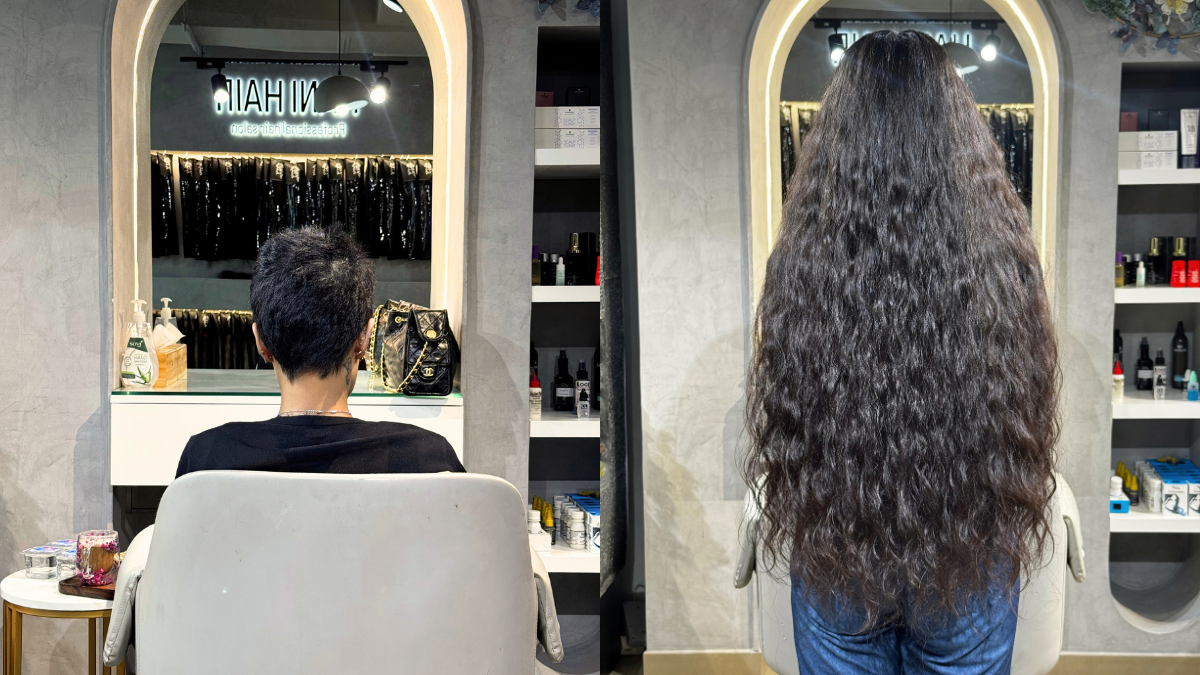
Short, blunt or heavily layered hair may require substantially more than 200 strands. In some major transformations, 300 strands or more may be necessary, depending on the natural density and desired length.
Does the Size of Each Strand Affect the Final Count?
Yes. Not every extension strand contains the same amount of hair.
Two clients may both receive 200 strands but achieve different levels of fullness if the individual extension pieces have different weights.
Small extension strands may be selected for:
- Fine natural hair
- Areas near the hairline
- Short-hair transformations
- More discreet placement
- Detailed colour blending
- Areas where larger attachments would be visible
Larger or fuller strands may carry more extension hair, but the natural section must be strong enough to support that weight.
The number of pieces should therefore always be considered together with the weight of each strand. Counting attachments alone does not show the total amount of extension hair being added.
How Does the Desired Result Affect the Number?
The correct quantity also depends on what the client wants to achieve.
Volume Only
A volume-only application may begin with approximately 100 strands. More may be required for greater fullness or to treat multiple areas.
Moderate Length and Volume
Approximately 200 strands is a common starting point for clients with average-density hair who want both additional length and noticeable volume.
Very Long or Very Full Hair
A more dramatic transformation generally requires more than 200 strands. The longer the requested result, the more pieces may be needed to prevent thin or transparent ends.
Short-to-Long Transformation
Short, thick or bluntly cut hair may require 300 strands or more because every visible layer must be carefully blended into the extensions.
These figures are general guidelines. The final recommendation should be made after assessing the client’s hair in person.
Why Can Too Few Extensions Look Unnatural?
Using too few extension strands can create several problems:
- The ends may look thin or separated
- The natural haircut may remain visible above the extensions
- The sides may appear empty
- The back may look full while the front remains sparse
- The extension hair may form narrow sections instead of one blended shape
- Very long hair may appear transparent through the lower lengths
Adding length without enough supporting volume can make the transformation look incomplete.
This is why longer extension requests often require a greater number of strands.
Can Too Many Extensions Be a Problem?
Yes. More extensions do not automatically produce a better result.
Installing more hair than the natural hair can safely support may create unnecessary weight and tension. It may also make the attachments difficult to conceal or make the finished hair feel too heavy.
The stylist should balance:
- The desired fullness
- Natural-hair strength
- Density and coverage
- Attachment size
- Strand weight
- Comfort
- Maintenance requirements
- The client’s daily styling habits
The correct quantity is enough to create a natural transformation without overloading the natural hair.
Are Tape and Weft Extensions Counted the Same Way?
No. The 100- and 200-strand guidelines refer primarily to individual strand-by-strand applications such as Ice or keratin extensions.
Other systems are measured differently:
- Tape extensions may be counted by tabs, sandwiches or packs
- Weft extensions may be measured by rows and grams
- Clip-in extensions are commonly measured by sets, pieces and total weight
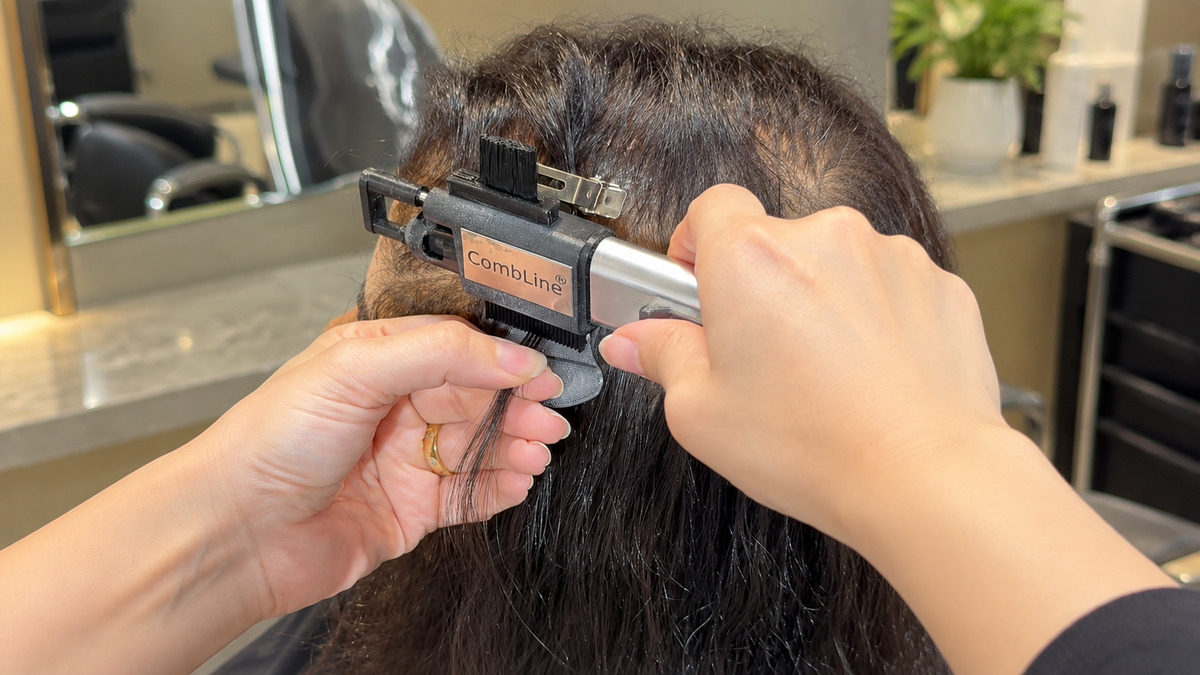
- CombLine applications may be planned according to the size and number of areas requiring targeted density
- Ring methods may be counted by individual strands, but strand weight can vary
For this reason, clients should not directly compare 200 Ice strands with 200 tape pieces. The attachment size and total amount of hair are completely different.
The most useful measurement is the total amount of extension hair required to create the desired result safely and naturally.
How Is the Final Quantity Decided?
During a consultation, the stylist should assess:
- Natural-hair density
- Strand strength
- Starting length
- Haircut and layers
- Desired extension length
- Desired volume
- Areas requiring additional fullness
- Extension method
- Size and weight of each strand
- Colour combinations
- Whether the attachments can be concealed
- The client’s lifestyle and maintenance preferences
Photographs can help communicate the desired result, but an exact quantity may require an in-person assessment.
How Many Hair Extensions Will You Need?
As a general guide at Hani Hair:
- Volume only: A minimum of approximately 100 individual strands, with more added when greater fullness is required
- Length and volume: Approximately 200 individual strands as a standard starting point
- Very long or very full results: More than 200 strands may be required
- Short-to-long transformations: Approximately 300 strands or more may be necessary in some cases
The correct number is always customised. Natural density, starting length, attachment size and the desired finished length all influence the final recommendation.
Book a Hair-Extension Consultation at Hani Hair Dubai
A natural full-head transformation requires more than choosing a length and colour. The quantity and weight of the extension hair must also be matched carefully to the client’s natural hair.
At Hani Hair in JLT, Dubai, our specialists assess your density, starting length, haircut and desired result before recommending the number of extensions required.
Whether you want subtle volume, additional length or a major short-to-long transformation, we will create a customised placement plan designed to achieve a full, balanced and naturally blended finish.
Contact Hani Hair to arrange your consultation and discover how many hair extensions you may need for your desired transformation.
Related Posts
Balayage vs Highlights in Dubai: Which Is Right for You?
-
Posted by
Hani Hair
Why Are Ice and CombLine Extensions the Best Combination for Length, Volume and Thin Areas?
-
Posted by
Why Is CombLine Ideal for the Front, Top and Crown Areas With Low Hair Density?
-
Posted by
Hair Extensions for Short Hair: How Short Is Too Short?
-
Posted by
Do Hair Extensions Damage Your Natural Hair? The Honest Answer
-
Posted by
How Long Do Hair Extensions Last? Maintenance Schedules for Every Method
-
Posted by
6D Hair Extensions in Dubai: Manual vs Electric Application, Benefits and Aftercare
-
Posted by
Ice Hair Extension Maintenance: What Happens During a Refill Appointment?
-
Posted by
Which Hair Extension Method Is Best for Fine or Thin Hair?
-
Posted by
Professional Blow-Dry and Hairstyling in Dubai: Styles, Benefits and What to Expect
-
Posted by
Women’s Haircuts in Dubai: How to Choose the Right Cut for Your Hair
-
Posted by
Different Types of Hair Colour: Balayage, Highlights, Full Colour and More
-
Posted by