Blog
Why Are Ice and CombLine Extensions the Best Combination for Length, Volume and Thin Areas?
Many clients want long, voluminous hair but have uneven natural density. The hair through the back and sides may be strong enough to support extensions, while the front, parting, top or crown remains noticeably finer.
Using only one extension method may improve the overall length but leave these visible areas looking thin. It may also create an imbalance: the ends appear full and long, but the top does not have enough density to connect naturally with them.
This is where a customised combination of Ice and CombLine extensions can be especially effective.
Ice extensions create the main transformation through the back and sides, while CombLine adds carefully controlled density in finer areas where traditional attachments may be too visible. Together, they can produce a more complete and naturally balanced result.
At Hani Hair in JLT, Dubai, the placement and quantity of both methods are customised according to the client’s natural-hair density, strength, condition and desired transformation.
What Are Ice Hair Extensions?
Ice extensions are a professional strand-by-strand method applied using a cold attachment technique.
Small extension strands are connected individually to carefully selected sections of the client’s natural hair. The attachment points can be made very small and customised during the application.
Because each strand is positioned separately, the stylist has precise control over:
- The number of extensions applied
- The weight of each strand
- The size of each attachment
- The placement pattern
- The colours used
- The amount of length and volume created
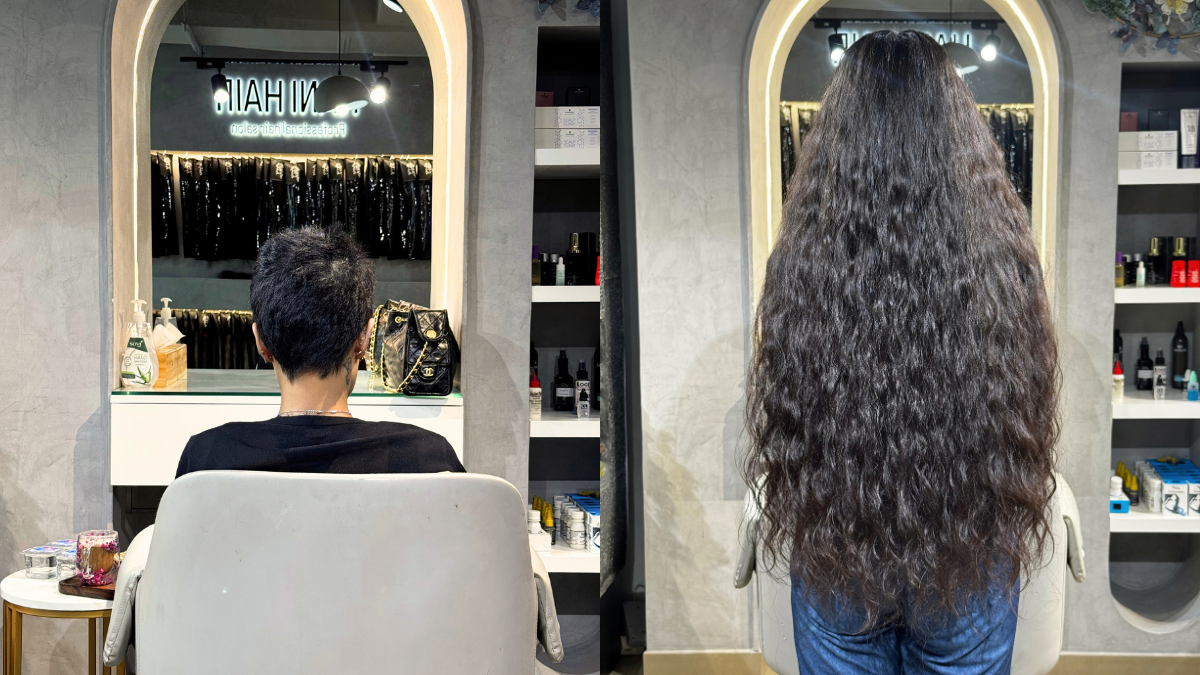
Ice extensions can be used for a full-head transformation, including significant changes from shorter hair to longer, fuller hair.
What Are CombLine Hair Extensions?
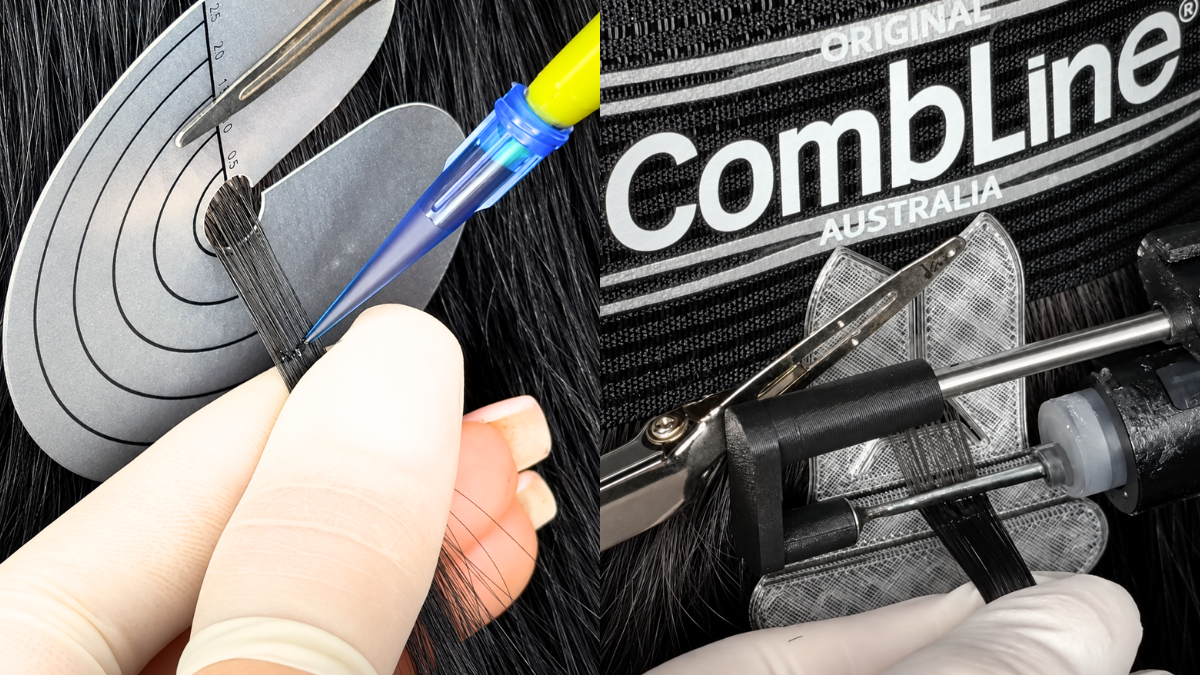
CombLine is a specialised hair-enhancement method designed for targeted density.
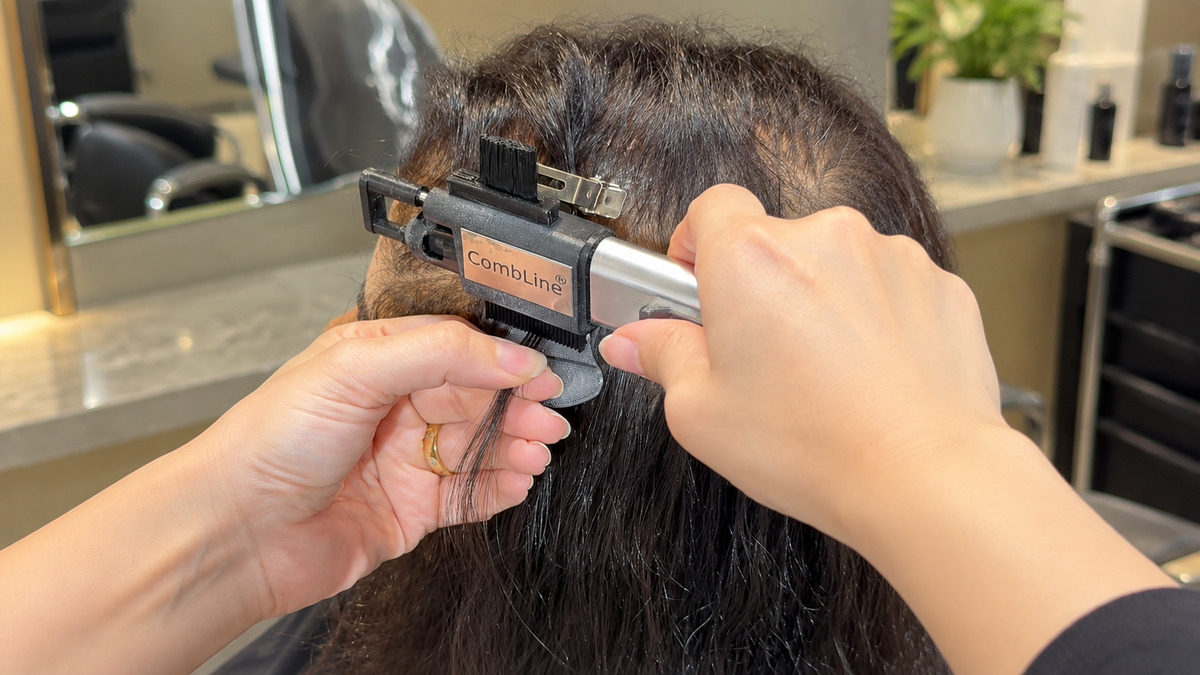
Fine sections of extension hair are attached directly to carefully selected natural hairs using a professional CombLine tool and bonding material. The attachment points are extremely small, allowing the stylist to work in visible areas where larger bonds, rings or tapes may be difficult to conceal.
CombLine can be applied to areas such as:
- The front and temples
- The sides around the face
- The fringe
- The top of the head
- The parting
- The crown
- Small gaps between other extensions
Although CombLine may be used more extensively in some cases, it is most commonly used to target particular problem areas rather than create the main length of a full-head transformation.
Why Does Ice Provide the Main Length and Volume?
Creating significantly longer hair requires enough extension strands to build density from the roots through the mid-lengths and ends.
Ice extensions are well suited to this part of the transformation because individual strands can be distributed across the back and sides. This allows the added hair to move naturally and prevents all the weight from being concentrated in one wide attachment.
The stylist can also combine multiple colours to create a dimensional match instead of using one flat shade.
Depending on the starting haircut and desired result, Ice extensions may be used to:
- Add considerable length
- Increase fullness through the back
- Fill thin or transparent ends
- Improve density around the sides
- Create a more balanced overall shape
- Blend short layers into longer extension hair
For a full transformation, the number and weight of strands must be sufficient to prevent gaps. Clients with short hair or those requesting very long extensions will usually need more strands than someone adding moderate volume to naturally long hair.
Why Can’t Ice Extensions Always Fill the Front and Top?
Even though Ice attachments can be made very small, the front, top and crown present additional challenges.
These areas are highly visible and may have less natural hair available to support and conceal an extension. The hairline and temples can also contain finer, more delicate strands.
Placing too many standard extension strands in an area with very low density may create several problems:
- The attachments may become visible
- The added hair may look separated from the roots
- There may not be enough natural hair to conceal the bonds
- Too much weight may be placed on delicate strands
- The top may still look thin compared with the fuller lengths
- The client may have fewer styling options
For this reason, the main Ice application usually needs to stop before reaching areas where the natural density becomes too low. CombLine can then be used to continue the blend more discreetly.
How Does CombLine Complete the Transformation?
CombLine acts as the detailed finishing method.
After Ice extensions create the main length and volume, CombLine can be added through selected areas that still require density. Instead of leaving an obvious difference between the full lower sections and the finer top, the stylist can gradually connect the two.
For example, Ice extensions may create long, full hair through the back and sides. CombLine may then be used to:
- Soften sparse areas near the temples
- Add density around the front
- Improve fullness beside the parting
- Reduce visible scalp through selected top areas
- Fill separation around the crown
- Connect the natural top layers with the extension hair
- Create softer and fuller face-framing sections
CombLine is specifically designed for areas such as the fringe, top, sides and crown, and it can be combined with another extension system to provide an additional layer of coverage.
Why Does This Combination Look More Natural?
A natural-looking extension result depends on more than the quality or length of the extension hair. The distribution of volume is equally important.
If the lower half of the hair becomes dramatically fuller while the top remains sparse, the transformation may look unbalanced. The extensions might blend through the ends but still appear disconnected near the roots.
Combining Ice and CombLine allows density to be built in stages:
- Ice creates the foundation of length and volume.
- Smaller Ice strands refine selected areas through the sides.
- CombLine fills carefully chosen gaps near the front, top or crown.
- A professional haircut blends the natural hair with the extensions.
- Styling brings the entire transformation together.
This gradual transition helps the added hair appear connected to the client’s natural density rather than looking like a separate layer underneath it.
Can Ice and CombLine Be Customised for Fine Hair?
Yes, but fine hair requires careful assessment.
The size of an attachment should not be selected only according to how discreet it looks. The stylist must also consider whether the natural section is strong enough to support the added extension hair.
For clients with fine hair, the application may require:
- Smaller and lighter Ice strands
- Fewer extensions in delicate areas
- Additional spacing between attachments
- Very precise CombLine placement
- Different quantities on each side
- A combination of several extension colours
- More frequent maintenance
- Adjustments when the natural hair changes
The objective is not to attach the maximum possible amount of hair. It is to create the desired result using a weight and placement plan that remains appropriate for the client’s natural hair.
Is This Combination Suitable for Every Type of Thinning?
No. Ice and CombLine extensions are cosmetic services; they do not treat the medical cause of hair thinning or hair loss.
This combination may be considered when there is enough healthy natural hair to support the attachments but the density is uneven or lower in certain areas.
It may not be appropriate when there is:
- Active or unexplained hair loss
- Severe breakage
- An irritated or inflamed scalp
- Very weak hair around the intended placement
- Insufficient hair to support the attachments
- A rapidly changing pattern of thinning
- Pain, tenderness or an untreated scalp condition
CombLine should not be attached to extremely weak baby hairs simply because it can be placed closer to visible areas. Even a very small attachment still requires suitable natural hair for support. Professional assessment remains essential.
Clients experiencing sudden or unexplained thinning should seek appropriate medical advice before proceeding with extensions.
Do Ice and CombLine Have the Same Maintenance Schedule?
No. This is one of the most important points to understand before choosing a combined application.
Ice extensions generally remain in place for approximately two to three months, depending on the natural growth rate, attachment condition, placement and home care.
CombLine is a more temporary, detailed method. At Hani Hair, CombLine areas are generally checked or renewed within approximately three weeks, depending on the client’s natural hair and how the application is wearing.
This means the CombLine sections may require attention before the main Ice application is ready for removal or reapplication.
A personalised maintenance plan may include:
- Shorter follow-up appointments for the CombLine areas
- Regular checks of the front, parting and crown
- A later full maintenance appointment for the Ice extensions
- Adjusting the placement as the natural hair grows
- Reducing or resting certain areas if the hair requires it
Following the correct schedule helps keep the attachments discreet and prevents grown-out sections from becoming tangled or placing unnecessary movement on the roots.
How Should You Care for a Combined Application?
Because the two methods have different attachment systems, aftercare must protect both.
Clients should:
- Follow the stylist’s first-wash instructions
- Brush the lengths gently while supporting the roots
- Avoid brushing directly across CombLine attachments
- Keep oils, masks and heavy conditioners away from all bonds
- Dry the roots and attachment areas completely
- Avoid sleeping with wet hair
- Use heat protection through the lengths and ends
- Keep concentrated heat away from attachment points
- Sleep with the hair in a loose braid or low ponytail
- Avoid tight hairstyles that pull on the front or crown
- Attend every recommended maintenance appointment
- Contact the salon if an attachment becomes uncomfortable
Do not pull, cut, pick or attempt to remove either method at home.
Are Ice and CombLine the Best Combination for You?
Ice and CombLine can be one of the most effective combinations for clients who want substantial length and volume but also have finer areas around the front, top, parting or crown.
Ice provides the structure of the transformation. CombLine adds the detailed finishing work that helps the top and front connect naturally with the fuller lengths.
However, the best combination is always the one that suits the client’s natural hair. Some clients may need Ice alone, CombLine alone or another method entirely. Others may benefit from a smaller transformation that protects delicate areas rather than trying to achieve maximum density immediately.
Book an Ice and CombLine Consultation at Hani Hair Dubai
A successful combination application requires a detailed plan for both the overall transformation and the finer visible areas.
At Hani Hair in JLT, Dubai, our extension specialists assess your natural-hair condition, density, length, colour and areas of concern before recommending a customised method.
We can use Ice extensions to create the main length and volume, then strategically place CombLine through suitable areas at the front, top or crown to produce a fuller and more naturally balanced result.
Contact Hani Hair to arrange a professional consultation and discover whether an Ice and CombLine combination is suitable for your hair.
Related Posts
Why Is CombLine Ideal for the Front, Top and Crown Areas With Low Hair Density?
-
Posted by
Hani Hair
Hair Extensions for Short Hair: How Short Is Too Short?
-
Posted by
Do Hair Extensions Damage Your Natural Hair? The Honest Answer
-
Posted by
How Long Do Hair Extensions Last? Maintenance Schedules for Every Method
-
Posted by
6D Hair Extensions in Dubai: Manual vs Electric Application, Benefits and Aftercare
-
Posted by
Ice Hair Extension Maintenance: What Happens During a Refill Appointment?
-
Posted by
How Many Hair Extensions Do You Need for a Full Head?
-
Posted by
Which Hair Extension Method Is Best for Fine or Thin Hair?
-
Posted by
Ice vs Keratin Hair Extensions: Which Method Is Right for You?
-
Posted by
Clip-In Hair Extensions in Dubai: Instant Length and Volume Without Commitment
-
Posted by
Tape-In Hair Extensions in Dubai: Types, Benefits, Application and Aftercare
-
Posted by
Ring Hair Extensions in Dubai: Micro Rings, Nano Rings and Everything You Need to Know
-
Posted by